

- BNP senses ‘dangerous conspiracy’ against democratic transition |
- CEC Vows Credible Election to End Stigma |
- High-level meeting reviews country’s economic progress |
- Dhaka suspends visa, consular services at its Delhi, Agartala Missions |
- Govt to cut savings certificate profit rates from January |
Violence Against Journalists Reflects a Global Crisis
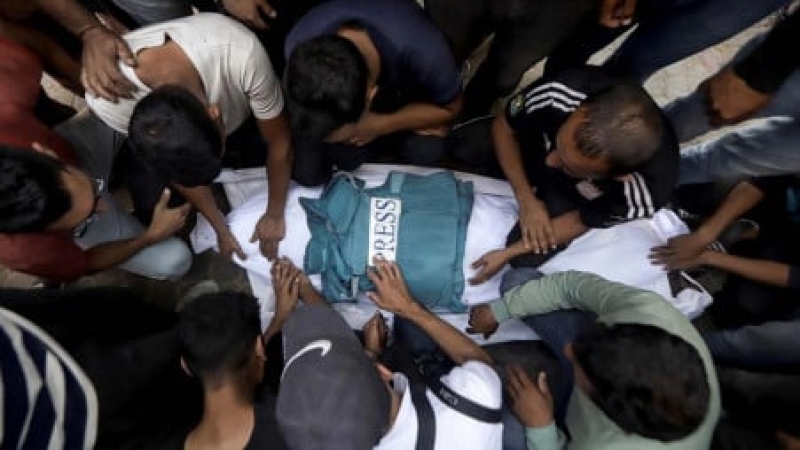
Mourners attend the funeral of a Palestinian journalist killed in an Israeli air strike in June 2025 at al-Shifa Hospital in Gaza City.
A journalist is killed somewhere in the world roughly every four days in connection with their work, according to the United Nations, a trend that continues to rise despite clear protections under international law.
At least 72 media workers have been killed so far this year, following 125 fatalities in 2024. These deaths underscore a widening global pattern in which journalists and media institutions are increasingly targeted for carrying out their professional duties.
Recent attacks on media outlets in Bangladesh are part of this broader international phenomenon. From conflict zones to countries that formally describe themselves as democracies, journalists face mounting threats, including killings, bombings, abductions, arrests, censorship and intimidation.
Research by international press freedom and policy organisations shows that violence against journalists has become a persistent feature of modern conflicts and political unrest. Some of the deadliest incidents include coordinated suicide bombings targeting reporters in Afghanistan, mass killings of journalists covering elections in the Philippines, and attacks on newsrooms and correspondents in Europe, South Asia, Africa and Latin America.
In recent years, Gaza has emerged as one of the most dangerous places for journalists, with a sharply rising death toll since late 2023. Many reporters there have been killed while clearly identified as members of the press, while others face severe shortages of food, medical care and basic safety.
Experts warn that the response from the international community has often been muted, contributing to a growing sense that journalist deaths in conflict zones are becoming normalised.
Beyond war zones, risks are also increasing in countries traditionally considered safer for the media. Journalists covering protests and political unrest in several democracies have faced arrests, physical attacks and growing institutional restrictions on press access.
Analysts note that violence against journalists is driven by a combination of armed conflict, authoritarian governance, organised crime and the erosion of norms that once treated reporters as non-combatants.
Bangladesh’s recent experiences reflect this global crisis. Press freedom advocates caution that when attacks on journalists go unchecked in one place, they set precedents elsewhere. History shows that the silencing of the media often signals wider threats to democratic rights and civil liberties.