

- Civilian death toll climbs in Gaza, Lebanon and West Bank |
- US Envoy Sergio Gor Meets PM Tarique Rahman in Dhaka |
- Fifa Scraps World Cup Investment Plan After Member Backlash |
- Dhaka Air Quality Remains Moderate, Ranks 18th Globally |
- US urges global partners to increase contributions for Rohingyas |
ICJ Rules Strike Right Protected Under ILO Convention
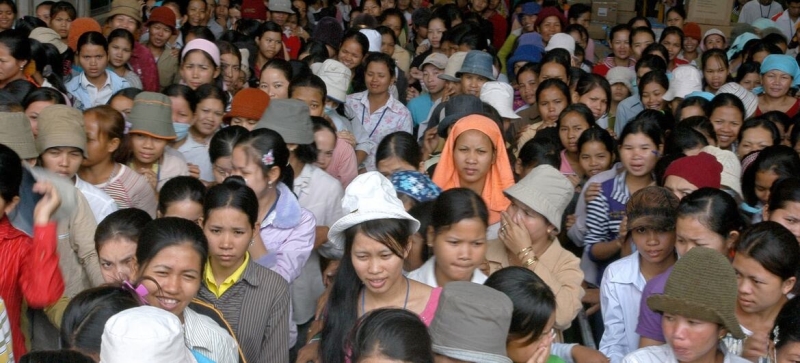
Cambodian garment workers protest outside their factory. (file photo)
The UN International Court of Justice (ICJ) on Thursday ruled that the right to strike is protected under a core International Labour Organization (ILO) convention, in a landmark advisory opinion resolving a long-running global dispute between workers and employers.
By a 10–4 majority, the court held that “the right to strike of workers and their organisations is protected” under the Freedom of Association and Protection of the Right to Organise Convention, 1948 (No. 87).
However, the court clarified that its opinion does not define the precise scope of the right. It stated that its conclusion “does not entail any determination on the precise content, scope or conditions for the exercise of that right.”
The case was referred to the ICJ by the ILO’s Governing Body in November 2023 after years of disagreement among governments, employers and workers over whether Convention No. 87 implicitly protects strike action, despite not explicitly mentioning it.
At the centre of the dispute was whether freedom of association under the convention includes the right of workers and their organisations to take collective strike action.
Employers’ groups argued that the treaty contains no provision implying such a right and that its drafting history shows no intention to include strikes.
Workers’ representatives, however, maintained that the right to strike is an essential element of freedom of association and has long been recognized in international labour practice.
The ICJ acknowledged that Convention No. 87 does not explicitly refer to strikes but said this does not exclude the issue from its scope. It found that strike action may fall within the ordinary meaning of workers’ organisational “activities” protected under the treaty.
While the ruling on jurisdiction and admissibility was unanimous, four judges dissented from the central conclusion.
Judge Peter Tomka argued that the majority expanded the convention beyond what states had agreed, saying it protects organisational autonomy but not specific collective economic actions such as strikes.
Judge Xue Hanqin described the ruling as closer to “human rights advocacy than treaty interpretation,” saying it should have been grounded strictly in the treaty text and drafting history.
ICJ advisory opinions are not legally binding, but they carry significant legal and political influence and often shape international and national legal debates.
The ICJ, based in The Hague, is the principal judicial organ of the United Nations and consists of 15 judges elected by the UN General Assembly and Security Council.