
- Dhaka Ranks 6th Among World's Most Polluted Cities on Wednesday |
- RMG Workers' Minimum Wage Raised 36% to Tk 17,000 |
- Decades of gains against AIDS could unravel as HIV funding dries up |
- Five women killed every hour by partners or family members |
- Five Auto-Rickshaw Passengers Killed in Cox’s Bazar Crash |
HIV Funding Cuts Threaten Decades of Gains Against AIDS
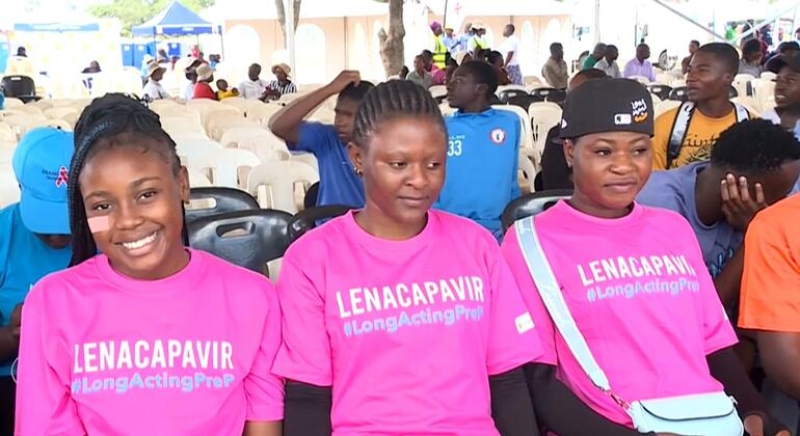
Youth at a UNAIDS event in Zimbabwe wearing Lenacapavir t-shirts.
Decades of progress against AIDS, one of the greatest public health achievements in history, could be reversed as international HIV funding declines and campaigns against human rights and gender equality gain ground, the UN agency leading efforts to end the pandemic warned on Tuesday.
HIV, the virus that attacks the immune system and causes AIDS, was once considered a death sentence. Life-saving medicines have since transformed it into a manageable health condition, enabling millions of people living with the virus to lead longer lives.
Around 32.1 million of the 40 million people living with HIV are now receiving treatment. However, low- and middle-income countries face a $4.3 billion funding gap between available resources and the amount needed to sustain progress, according to a new report by UNAIDS.
Prevention hardest hit
Innovative medicines, including lenacapavir, a twice-yearly injection used for HIV pre-exposure prophylaxis (PrEP), are now available to help prevent infection. However, prevention programmes have been particularly hard hit by funding cuts.
In 2025, around 446,000 fewer people accessed PrEP than in the previous year across the countries reporting data to UNAIDS.
Among key populations, PrEP use declined by 59 per cent among sex workers, 58 per cent among people who inject drugs, 23 per cent among transgender people and 17 per cent among gay men and other men who have sex with men.
Other prevention programmes also suffered. Global condom distribution fell from three billion to 2.7 billion between 2024 and 2025, while voluntary medical male circumcision procedures dropped by 53 per cent across priority countries over the same period.
“We know what happens when HIV prevention collapses. People become infected, treatment needs rise, costs soar and lives are lost,” said UNAIDS Executive Director Winnie Byanyima.
Avenues closing
“Every clinic that closes, every outreach worker who loses their job and every young woman turned away from prevention services today risks becoming a new HIV infection tomorrow,” she warned.
Although civil society organisations are increasingly recognised as vital to the fight against AIDS, significant amounts of their funding have been withdrawn over the past two years. As a result, many have been forced to suspend or scale back their HIV-related work.
“Community organisations are not an optional extra. They are often the only trusted bridge between health systems and the people most at risk of HIV,” Byanyima said.
One study found that more than three-quarters of the civil society organisations surveyed had experienced service disruptions, while over 80 per cent were operating at less than half their capacity by the end of 2025.
Drowning in debt
In many affected countries, debt obligations now exceed government health spending by two or even three times, making it difficult for them to absorb the loss of international funding.
External resources account for up to 98 per cent of all HIV-related funding in Nigeria, 94 per cent in Mozambique and 80 per cent in Uganda.
International donors also finance all reported HIV prevention spending in Eritrea and Zambia, according to UNAIDS.
The worst is ahead
UNAIDS warned that the full impact of the 2025 funding cuts may not yet have been felt.
While existing treatment programmes continue to provide some protection in the short term, disruptions to HIV prevention, testing and treatment services are expected to increase new infections, AIDS-related illnesses and deaths.
Warning signs are already emerging, with fewer people being tested for HIV or starting treatment. Laboratory services are weakening, while community support systems that help people remain in care are being dismantled.
Funding cuts are also severely affecting efforts to detect and treat advanced HIV disease (AHD). The condition killed about one in eight of the 3.4 million people affected worldwide within a year in 2025.
Testing for advanced cases fell by 35 per cent across six countries between 2024 and 2025. These disruptions are making it increasingly difficult to identify treatment failure, diagnose advanced disease and provide timely, life-saving care.
Ending AIDS by 2030
UNAIDS stressed that the world can still achieve its goal of ending AIDS as a public health threat by 2030, set in 2015 as part of the Sustainable Development Goals.
Achieving the target would prevent 3.2 million new HIV infections and avert 1.3 million AIDS-related deaths by the end of the decade.
The agency said this would require making HIV a national priority, integrating services into inclusive, rights-based health systems and pursuing reforms to end stigma, discrimination and exclusion.
Source: UN News