

- PM Tarique inaugurates three pilot SDG villages |
- Indian High Commissioner Trivedi meets PM Tarique |
- SSC, Equivalent Exam Results Published, Pass Rate 62.25% |
- Global Oil Prices Rise Again Amid Hormuz Uncertainty |
- 17 Bangladeshis Killed in Saudi Arabia Factory Fire |
Daily Fruit Juice Linked to Lower Depression Scores: Study
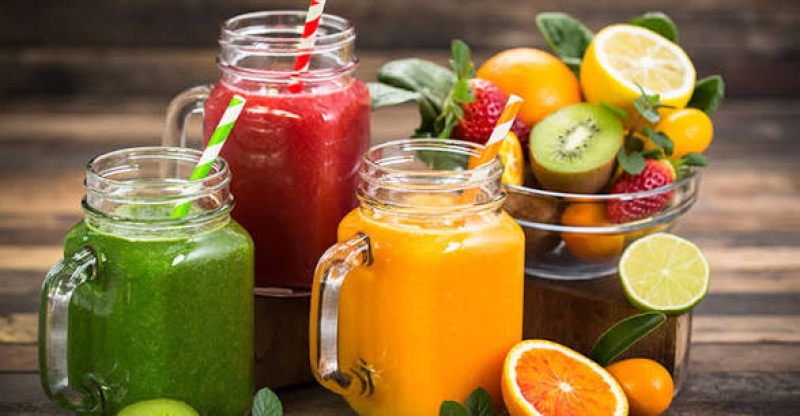
A daily glass of 100% fruit juice or a smoothie may help improve mental well-being, particularly among people who consume relatively few fruits and vegetables, according to a study by researchers at Newcastle University.
The four-week randomised trial involved 42 adults who normally consumed two or fewer portions of fruit and vegetables a day. Researchers provided financial and educational support to help participants increase their intake toward the recommended five portions a day.
Participants were divided into three groups. One continued with their usual diet, while the other two received support to increase their fruit and vegetable intake. One of the supported groups was also asked to drink a daily glass of fruit juice or a smoothie.
After four weeks, both supported groups had increased their fruit and vegetable consumption. However, participants who included fruit juice or smoothies reported lower levels of depression.
The findings, published in the British Journal of Nutrition, showed that the fruit juice and smoothie group had depression scores 2.52 points lower on a 27-point scale than the control group. Researchers described the difference as modest but statistically significant.
Dr Courtney Neal, who conducted the study while at Newcastle University and is now at the University of Liverpool, said many people struggle to meet the recommended five daily portions of fruit and vegetables.
The researchers also found that participants receiving dietary support increased their daily fibre intake by an estimated 8 to 10 grams.
The findings suggested that participants who drank juice or smoothies continued to add other fibre-rich fruits and vegetables to their diets.
Researchers found no harmful changes in metabolic health markers among those who consumed fruit juice or smoothies during the four-week study, despite concerns about the sugar content of fruit juice.
Dr Oliver Shannon, a lecturer in nutrition and ageing at Newcastle University and one of the study's senior authors, said a daily glass of fruit juice or a smoothie could be one way to help people meet recommended fruit and vegetable intake.
However, he said the findings on depression were encouraging but require further research, particularly among people experiencing poor mental well-being.
The study used standard GAD-7 and PHQ-9 questionnaires to assess anxiety and depression. The fruit juice or smoothie group recorded an adjusted average depression score of 2.93, compared with 5.45 in the control group.
The study was funded by the Fruit Juice Science Centre.
Source: Science Daily