

- India Says Hasina Cannot Conduct Politics From Its Soil |
- Bangladesh’s Bat-Making Hub Eyes Global Cricket Market |
- Landslide Deaths: Rohingya Refugees Pay For A Warmer Climate |
- Middle East crisis: Humanitarian fallout worsening by the day |
- The climate pattern, El Niño, putting millions at risk |
Wildfire Smoke Poses Growing Health Threat: WHO
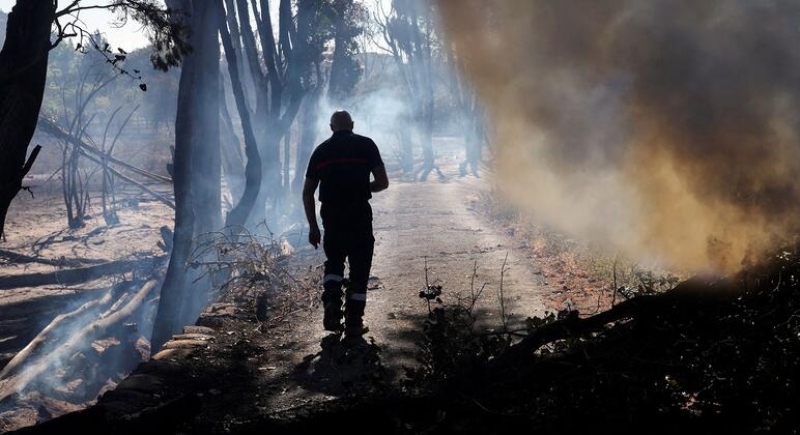
A firefighter surveys the smoldering aftermath of a wildfire in southern France.
Wildfire smoke can pose a serious health threat far beyond the areas directly affected by fires, the World Health Organization (WHO) has warned, as large wildfires continue to burn across parts of Europe and North America.
According to WHO, smoke from wildfires can travel across countries and even continents, exposing millions of people to hazardous air pollution. The agency warned that climate change, prolonged heatwaves, drought and changing land management practices are increasing the frequency and intensity of wildfires, making smoke exposure an escalating public health concern.
Although many wildfires are caused by human activity, hotter and drier conditions linked to climate change allow fires to ignite more easily and spread more rapidly. As a result, communities located far from active fires can experience poor air quality for days or even weeks.
Wildfire smoke contains a complex mixture of gases and fine particles released from burning vegetation, buildings and other materials. Fires that spread into urban or industrial areas can also emit additional toxic pollutants.
WHO identified fine particulate matter (PM2.5) as one of the greatest health concerns because it can penetrate deep into the lungs and enter the bloodstream. Exposure may cause coughing, eye and throat irritation, headaches, wheezing and shortness of breath, while aggravating asthma and other chronic respiratory and cardiovascular conditions.
Infants and young children, older adults, pregnant women, people with disabilities and those living in poorly insulated homes are among the groups most vulnerable to smoke exposure. Emergency responders and outdoor workers also face heightened risks because of prolonged exposure.
The agency also noted that wildfires can have significant psychological impacts, contributing to stress, anxiety and trauma during and after emergencies.
WHO urged people to monitor air quality alerts and follow guidance from local authorities, even if wildfires are not burning nearby.
"When wildfires are present in your area, even if some distance away, follow instructions from your local authorities, who will have the most up-to-date, on-the-ground information," said Dorota Jarosinska of WHO's European Centre for Environment, Climate Change and Health.
She advised that anyone who can smell smoke should reduce their exposure, particularly those in high-risk groups, and remain alert as wildfire conditions can change rapidly with shifting winds.
During periods of heavy smoke, WHO recommends staying indoors with doors and windows closed unless evacuation is ordered. If going outside is unavoidable, wearing a well-fitting FFP2 or N95 mask can help reduce exposure.
People with heart or lung conditions, pregnant women and anyone experiencing breathing difficulties should seek medical attention promptly.
WHO stressed that protecting communities requires more than firefighting alone. Strong early warning systems, timely public health information, access to healthcare and clean-air shelters for vulnerable populations are essential as wildfire seasons become longer, more frequent and increasingly severe.