

- Argentina, Spain divided over loyalties ahead of WC final |
- Feni admin advises students against staying out after Maghreb |
- Messi is 'pure history', says Scaloni |
- PM Tariques’s visit takes relations with China to highest peak |
Argentina, Spain divided over loyalties ahead of WC final
Argentina, Spain divided over loyalties ahead of WC final
From Cervantes and Borges to tortilla and asado, flamenco and tango, Argentina and Spain have long shared deep cultural and historical ties. But Sunday's FIFA World Cup final has left many people with connections to both countries struggling to decide where their loyalties lie.
InternationalSports Competitions
The showdown in New Jersey will be the first World Cup final between two Spanish-speaking nations since the inaugural tournament in 1930, when Uruguay defeated Argentina 4-2 in Montevideo.
"It feels like being caught between a rock and a hard place," said 75-year-old Juan Manuel Posada, who moved from Spain's Asturias region to Buenos Aires in 1968.
Although he has spent decades in Argentina and supports local club Independiente de Avellaneda, Posada said his heart remains with Spain.
"It's as if I had arrived just yesterday. My heart is in Asturias, in Spain, and with the Spanish national team," said the lifelong Sporting de Gijón supporter. "If Spain wins, that's wonderful. But if Argentina wins, I won't be unhappy either."
The close relationship between the two countries dates back centuries. Buenos Aires was founded in the 16th century by Spanish explorer Pedro de Mendoza, and Spanish influence remained strong even after Argentina gained independence. Large waves of Spanish immigration during the first half of the 20th century further strengthened those ties.
Eighty-one-year-old Manuel Fernández Acevedo, who moved from Baiona in Spain's Galicia region to Argentina as a child, said choosing between the two teams is nearly impossible.
"My daughter and granddaughter were born in Argentina. May the best team win. If Spain wins, that's great, and if Argentina wins, that's fine too," he said.
The close bond between the countries has also shaped football history. Argentine greats Alfredo Di Stéfano and Lionel Messi became legendary figures at Spain's biggest clubs — Real Madrid and Barcelona, respectively.
Despite their shared football heritage, Argentina and Spain have rarely met on the World Cup stage. Their only previous encounter came during the group stage of the 1966 World Cup, when Argentina defeated Spain.
InternationalSports Competitions
This time, however, the stakes are much higher.
Posada recalled a recent conversation with his Argentine grandson, who jokingly proposed a celebration plan depending on the result.
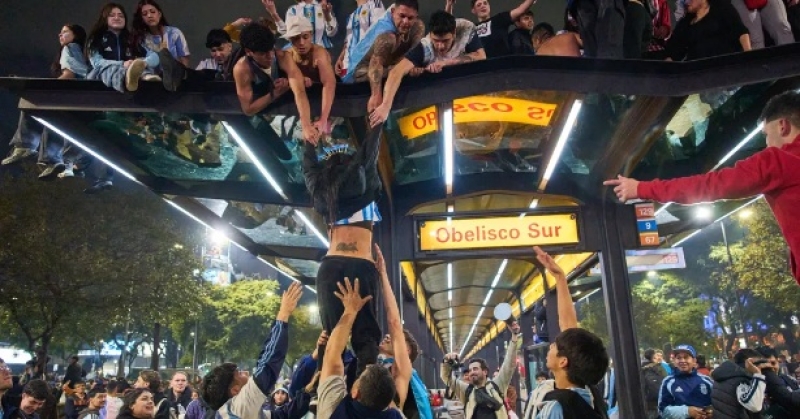
"My grandson told me, 'Grandpa, if Spain wins, I'll wear a Spain shirt and carry the Spanish flag while we celebrate. But if Argentina wins, you'll have to wear Argentina's shirt and carry its flag.' I agreed, although I don't think we could go to the Obelisk wearing a Spain shirt," Posada said with a laugh, referring to Buenos Aires' famous gathering place for Argentina's football celebrations.
On the other side of the Atlantic, hundreds of thousands of Argentines now live in Spain after emigrating over the past several decades, first during Argentina's military dictatorship from 1976 to 1983 and later because of recurring economic crises.
According to Spain's latest census data from January 2025, about 450,883 Argentina-born residents are living in the country.
For many of them, Sunday's final carries special significance.
"I see Spain as just another opponent, but with respect because we're living in their country and, in the end, we're all like brothers," said 19-year-old Nahuel Barreta, who has been living in Málaga for the past year.
"It feels like home here. We'll watch the match with friends at a bar downtown, as we usually do. I've never experienced a World Cup like this." - AP/UNB