

- Explosion Tears Through Keraniganj Madrasa Classroom |
- EC to Decide on Tarique, Zaima’s Voter List Entry |
- Tarique Rahman Pays Tribute at Shaheed Osman Hadi’s Grave |
- Tarique visits National Martyrs’ Memorial, pays homage to martyrs |
- Muslim League leads new electoral alliance, Jatiya Muslim Jote |
Bangladesh Faces Deadly Air Pollution Crisis, Urgent Action Needed
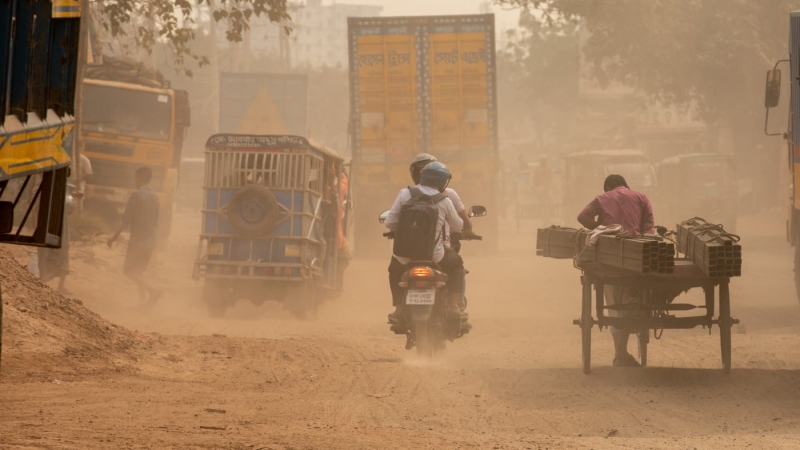
Air pollution in Bangladesh is more than an environmental problem—it is a major public health crisis. Every year, it is estimated to cause around 90,000 deaths, while countless more people suffer from chronic illnesses, reduced productivity, and lower quality of life. The economic burden of air pollution is enormous.
The most dangerous pollutants are tiny particles known as PM2.5, which are small enough to bypass the body’s natural filters and enter the bloodstream. While the World Health Organization recommends no more than 5 micrograms per cubic metre, Bangladesh’s national average in 2023 was 62 µg/m³—12 times higher. In cities like Dhaka and Gazipur, residents lose more than seven years of life expectancy on average due to air pollution.
Air pollution stems from multiple sources, including coal- and oil-fired power plants, diesel generators, brick kilns, traffic, industrial emissions, open waste burning, and household solid fuel use. Dust from construction and natural sources, as well as pollution from neighbouring countries, also contributes. Experts agree that a multi-pronged approach targeting all major sources is essential.
Common misconceptions, such as air pollution being mainly an outdoor or urban issue, or that planting trees can solve the problem, hinder effective action. In reality, indoor pollution is nearly as severe as outdoor, and rural areas face high pollution levels too.
Experts recommend six key policy measures: raising taxes on polluting fuels, phasing out coal-fired brick kilns, promoting cleaner cooking fuels for rural households, reducing reliance on coal and oil for electricity, strictly enforcing bans on open waste burning, and phasing out or retrofitting old, polluting vehicles. Prioritizing enforcement on the most harmful sources, particularly near densely populated areas, is crucial.
Individuals can also take steps to reduce exposure, such as using high-quality masks outdoors and installing HEPA-filter air purifiers at home, schools, hospitals, and workplaces. These measures can cut indoor pollution by up to 80% when used correctly.
Institutional change is essential. The government should focus on domestic pollution control immediately, while media and civil society play a role in educating the public and promoting realistic long-term solutions. Lessons from countries like China, the UK, and the US show that reducing air pollution is possible but requires sustained multi-sectoral action.
Bangladesh has the resources, knowledge, and public will to tackle this crisis. With coordinated efforts by the government, industry, media, and citizens, significant improvements in air quality are achievable, protecting health and the economy for generations to come.