

- Modi Invites Tarique to BRICS Summit in India |
- Govt Moves to Bring ETPs Online to Save Buriganga |
- President Shahabuddin Eyes Resignation: Sources |
- Fertilizer Shortage Threatens Bangladesh Crops: UN |
- Jamaat Expels Satkhira MP Gazi Nazrul Over Viral Video |
Satellites Spot Methane Leaks, Few Get Fixed: UN
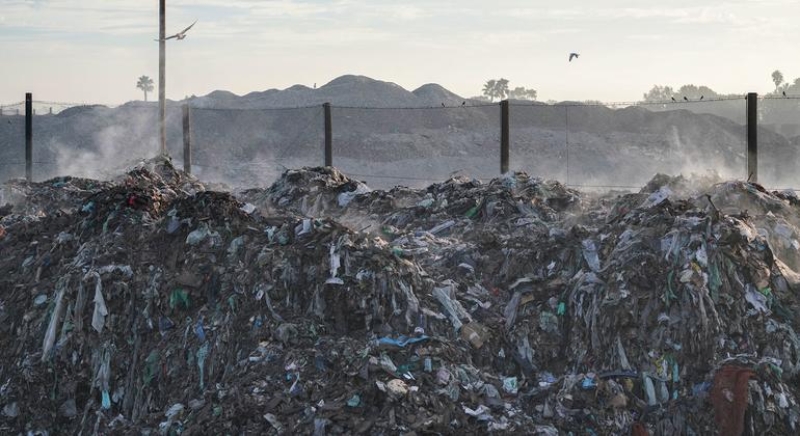
Landfills of rubbish are one cause of methane gas production.
Satellites can now detect major methane leaks from space within days, but only 13 per cent of those alerts receive a response from the governments or companies responsible, according to the UN Environment Programme (UNEP).
To address the gap, UNEP last month launched a new initiative, backed by Bloomberg Philanthropies, to help countries investigate and repair 80 per cent of major methane leaks detected by 2030. At present, only 10 countries have achieved that level of response.
Methane is responsible for about one-third of current global warming. Unlike carbon dioxide, it remains in the atmosphere for a much shorter period, meaning that reducing methane emissions can produce significant climate benefits within years rather than decades.
"Carbon dioxide remains the principal driver of long-term warming. But it is also time to prioritise cutting methane," UN Secretary-General António Guterres said.
"Aggressive reductions could produce noticeable temperature relief within a generation."
More than 60 per cent of global methane emissions come from human activities, primarily agriculture, fossil fuel production and waste management. The fossil fuel sector offers some of the fastest and most cost-effective opportunities to reduce emissions.
Satellite Alerts Drive Action
UNEP's Methane Alert and Response System (MARS) uses satellite data to detect major methane leaks in near real time and alerts governments and facility operators so they can investigate and repair them.
Since its launch in 2023, the system has issued more than 5,000 alerts across 33 countries, leading to more than 40 verified repairs.
In Algeria, one alert resulted in the repair of a methane leak that had persisted for decades, delivering climate benefits comparable to removing around half a million cars from the road each year.
Despite these successes, only 13 per cent of alerts currently receive a response from the governments or operators notified.
"We can now see methane pollution as it happens, in near real time, from space," UNEP Executive Director Inger Andersen said.
"With this capability, inaction is not an oversight—it is a choice."
Expanding Global Response
The expanded programme will strengthen technical support for governments, improve access to methane emissions data and help countries build the capacity to investigate leaks and respond more quickly.
"Cutting methane emissions is one of the most important steps we can take to tackle climate change—and one of the simplest and most cost-effective," said Michael Bloomberg, founder of Bloomberg Philanthropies and UN Special Envoy on Climate Ambition and Solutions.
"We have the data needed to stop methane leaks, and now we are helping countries turn that data into faster, bolder action," he added.
UNEP said stronger commitments from governments and operators are essential to closing the response gap and ensuring countries seize the opportunity to slow the pace of climate change through rapid methane emission reductions.