

- PM stresses skills-based, tech-driven higher education to tackle unemployment |
- Multilateralism Needs a New Deal, Can Anyone Deliver it? |
- Measles deaths hit low; US, Mexico, Bolivia lose free status |
- Leather Foundation launched: Fund sought to revive tanneries |
- ‘BARTA’ for local LC messaging, to save $7m a year, launched |
55-LNG cargoes cancelled amid Middle East crisis, Bangladesh eyes renewables
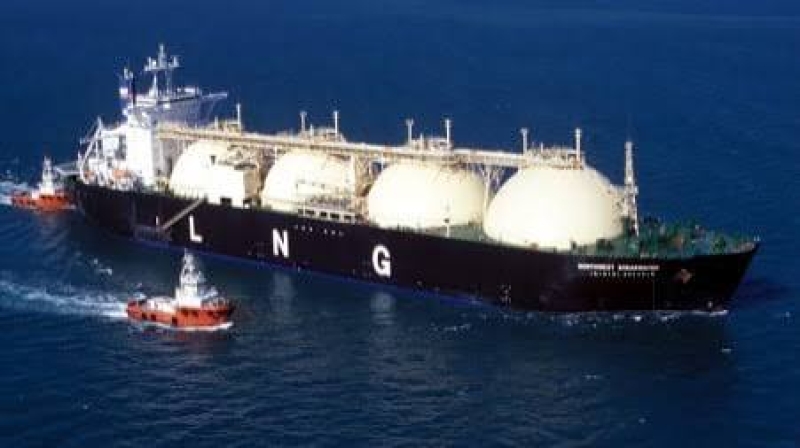
Prime Minister’s Adviser on Finance and Planning Professor Dr Rashed Al Mahmud Titumir today said Bangladesh has faced the cancellation of 55 Liquefied Natural Gas (LNG) cargoes since March 18 amid the ongoing Middle East crisis, forcing the government to procure LNG higher prices from the international spot market.
"The crisis has added around US$4.12 billion to the government's costs between March and September, while LNG import subsidies have reached approximately Taka 34,000 crore since the government took office in February, he said.
Titumir made the remarks at the inaugural session of the fourth Bangladesh Energy Conference at the Bangladesh Military Museum in the city.
He said Bangladesh's heavy dependence on imported fossil fuels had exposed the country to international price shocks, putting pressure on foreign exchange reserves and increasing production costs and inflation.
"The government inherited a financially strained and import-dependent energy sector," he said, adding that Taka 281,388 crore had been paid in capacity charges for idle power plants between 2009 and June 2026.
The government has increased diesel stocks from 17 days' supply when it took office to 38 days, with a target of building reserves to cover 90 days, Titumir said.
He said the government planned to add more than 10,000 megawatts (MW) of renewable energy capacity by 2030, including 5,500 MW from rooftop solar, 4,000-5,000 MW from ground-mounted solar and 450-500 MW from wind, waste-to-energy, floating solar and agricultural solar.
The government aims to meet 20 percent of electricity demand from renewable sources by 2030 and 30 percent by 2040, he added.
According to a press release, Taka 1,500 crore has been allocated for solar installations through loans carrying a six-percent interest rate and repayable over 12 years.
Titumir also stressed the importance of domestic gas exploration and strengthening the capacity of Bangladesh Petroleum Exploration and Production Company Limited (Bapex).
The government is pursuing a third floating LNG terminal with a daily regasification capacity of 600 million cubic feet and a land-based LNG terminal at Matarbari with a capacity of 1,000 million cubic feet per day, he said.
However, Hasan Mehedi, member secretary of the Bangladesh Working Group on Ecology and Development, opposed expansion of LNG infrastructure in environmentally sensitive areas, arguing that the money spent on imports could instead be invested in renewable energy.
Transparency International Bangladesh Executive Director Iftekharuzzaman called for an integrated national energy master plan prioritising renewable energy and stronger institutional capacity for the Sustainable and Renewable Energy Development Authority.
He also raised concerns about the absence of plans to manage solar panels and equipment after their operational life.
Ashanur Rahman, deputy managing director and chief economist of City Bank, said renewable energy could reduce import dependence, subsidies and exposure to international price shocks.
He said banks' reliance on short-term deposits made it difficult to finance projects requiring eight to 12 years of investment, calling for easier financing through green bonds and sukuk.
Mostafa Al Mahmud, president of the Bangladesh Sustainable and Renewable Energy Association, said inconsistencies between government announcements and regulations were discouraging private investment.
He questioned restrictions under the new solar power law and called for greater transparency and accountability among implementing agencies.
The conference brought together policymakers, energy-sector stakeholders and experts to discuss the country's energy challenges and the transition towards sustainable energy, reports BSS.