

- PM Assures Support for Waste-to-Fuel Technology |
- CJP founder Abhijeet Dipke detained after flight lands in Delhi |
- India’s young return to streets as anger against EC and Modi grows |
- Dhaka’s air quality 4th worst in the world this morning |
- Delhi on High Alert Ahead of CJP Protest With 20,000 Personnel |
PM Assures Support for Waste-to-Fuel Technology
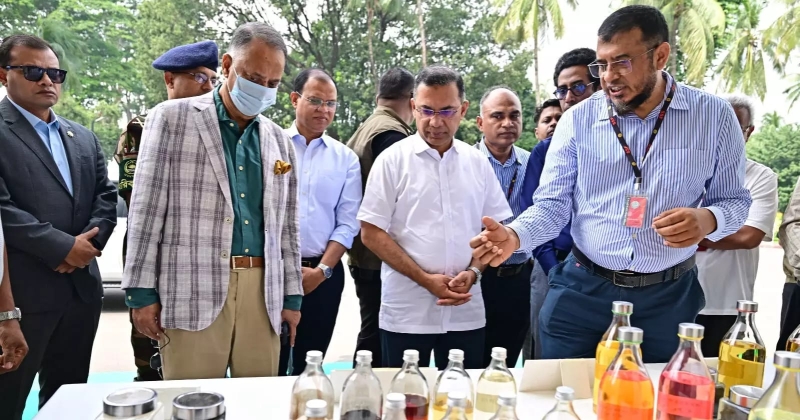
Prime Minister Tarique Rahman on Saturday assured researchers of the government’s support for a technology that could convert waste into fuel oil and help reduce Bangladesh’s dependence on imported energy.
He gave the assurance when a research team led by Khulna University of Engineering and Technology (KUET) Professor Dr Md Khalequzzaman briefed him on the technology at his office in Tejgaon, according to a release from the Prime Minister’s Press Wing.
The technology uses a process known as hydrothermal liquefaction (HTL) to convert human waste, sewage treatment plant waste, kitchen waste and agricultural residues into fuel oil.
The researchers said they had been working on the technology for around 10 years and had achieved a biocrude yield of 50–55% in laboratory tests. They have also made progress in producing biocrude with a high diesel content.
The next step is to establish a pilot plant capable of processing one to three tonnes of waste a day. The facility would help assess the technology’s efficiency, production costs and commercial viability. The estimated cost of the pilot project is Tk 100–120 crore.
According to the researchers, commercial-scale production could replace around 10–15% of Bangladesh’s imported crude oil and save foreign currency equivalent to Tk 6,500–13,000 crore annually.
However, they said the estimates would need to be validated through large-scale technical and economic assessments.
The researchers added that the technology could also help reduce environmental pollution, improve waste management and create opportunities for developing a domestic fuel industry.
The Prime Minister assured them of the government’s necessary cooperation in advancing the initiative.
Power and Energy Minister Iqbal Mahmood Tuku, State Minister Anindya Islam Amit, University Grants Commission member Professor Abdullah Al Mamun, KUET Vice-Chancellor Professor Mohammad Masud and Bangladesh Petroleum Corporation Chairman Dr Mohammad Rafiqul Islam were present at the briefing.