

- Govt puts rural Bangladesh at heart of development agenda |
- BNP celebrates its 48th founding anniversary Tuesday |
- Dengue situation worsens in Pirojpur |
- Hundreds feared stuck in hydropower tunnels in Nepal and Tibet |
- Nepal’s Rasuwa flood disaster: Is there a limit to Human Folly? |
Oil prices rise, Asian stocks mixed amid renewed Middle East violence
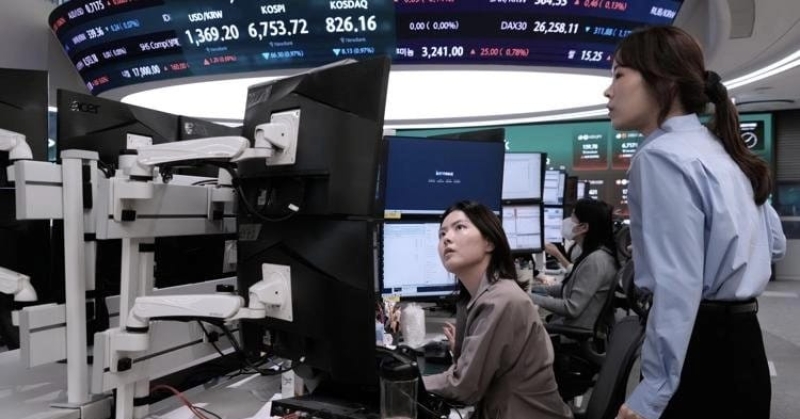
Oil prices rose further and Asian stock markets moved in different directions Tuesday as renewed violence in the Middle East increased uncertainty over the future of the conflict.
The latest escalation came after more than a month without major fighting in the Iran war, raising concerns about possible disruptions to oil supplies and global markets.
Shares of online fast-fashion company Shein fell sharply after beginning trading in Hong Kong on Tuesday. The stock dropped as much as 10% before recovering slightly to trade about 5% lower by midday.
Brent crude, the international oil benchmark, rose 0.8% to $91.23 a barrel. It had gained 2.7% on Monday after the United States struck rocket launchers on an Iranian island, saying they were preparing to place mines in the Strait of Hormuz.
Iran responded by firing missiles at US positions in Jordan, all of which were intercepted, according to US officials.
The conflict has already reduced shipping through the Strait of Hormuz, a key global oil route that previously carried about one-fifth of the world’s oil shipments.
The disruption has kept oil prices elevated and increased costs for consumers, from fuel to goods transported by sea.
US benchmark crude rose 1% to $86.62 a barrel.
Asian markets were mixed. Hong Kong’s Hang Seng index fell 0.9% to 25,332.10, while Shanghai’s Composite index was almost unchanged at 3,985.93.
Tokyo’s Nikkei 225 gained 0.2% to 66,420.26, while South Korea’s Kospi rose more than 0.2% to 6,835.51.
Australia’s S&P/ASX 200 slipped 0.1% to 9,066.40. Taiwan’s Taiex added 0.2%, while India’s Sensex gained 0.3%.
US stock futures were up 0.1%.
Wall Street ends August lower
US stocks finished August on a weaker note Monday, with the S&P 500 falling 0.3%. The Dow Jones Industrial Average dropped 0.7%, while the Nasdaq composite declined 0.1%.
Most sectors of the S&P 500 ended lower.
Edison International fell 23.1% and PG&E dropped 20.1%, the two biggest declines in the index. The losses followed reports about proposed California wildfire legislation that could allow insurers to seek compensation from utility companies over wildfire-related claims.
Energy companies, however, benefited from higher oil prices. Exxon Mobil gained 2.7%, while Chevron rose 2.1%.
Higher energy costs are also adding to inflation, which remains above the Federal Reserve’s 2% target.
Persistent inflation has put pressure on household budgets and consumer confidence while making the central bank’s decisions on interest rates more difficult.
The yield on the two-year US Treasury note remained at 4.34% Monday. It has risen considerably from around 3.50% at the start of 2026.
The yield on the 10-year Treasury note increased to 4.75% from 4.73% late Friday.
Investors are also watching the US jobs market closely. The government is expected to release August employment figures later this week.
The US job market unexpectedly weakened in July, with employers cutting 23,000 jobs. Government revisions also showed 103,000 fewer jobs were added in May and June than previously reported.
The Federal Reserve faces a difficult balance: raising interest rates could help control inflation, but higher borrowing costs could also weaken the job market.
In early Tuesday trading, the US dollar rose to 159.94 Japanese yen from 159.74 yen. The euro fell slightly to $1.1604 from $1.1619.