

- Cabinet Approves Secretariat Relocation to Sher-e-Bangla Nagar |
- Nearly Half of Bangladesh’s Families Are in Debt: BBS |
- Bangladesh Seeks Details on Execution of Two Nationals |
- Former Bangladesh Air Force Chief Arrested in Qatar |
Trump Announces ‘Largest Oil Deal in World History’ With Venezuela
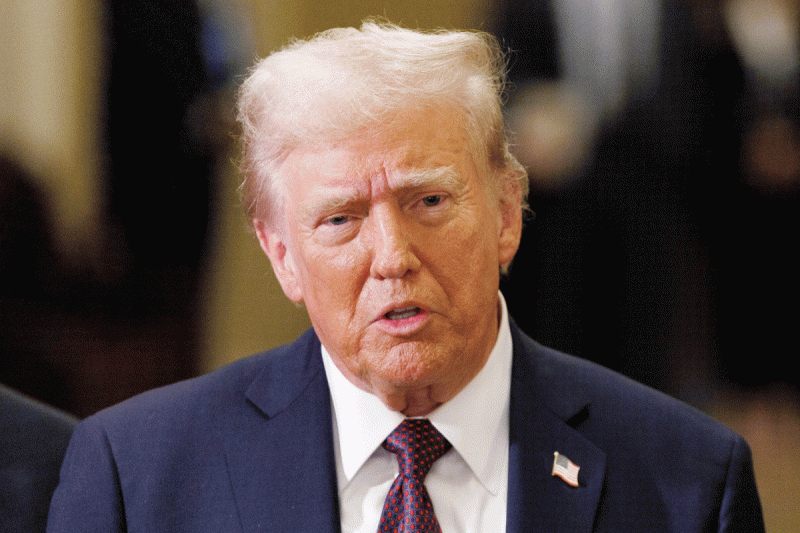
US President Donald Trump
US President Donald Trump has announced what he described as “the largest oil deal in world history” with Venezuela, potentially giving the United States access to the South American country's vast crude oil reserves.
Trump announced the agreement in a social media post on Friday, saying the deal would create major investment opportunities in Venezuela's oil sector.
According to Trump, US Secretary of State Marco Rubio, Defense Secretary Pete Hegseth and Venezuela's acting President Delcy Rodríguez were involved in negotiating the agreement.
Venezuela's government said the deal covers the development of 17 oil fields containing an estimated 65 billion barrels of proven reserves. It could attract around $100 billion in investment in the country's oil industry and generate more than $209 billion in tax revenue for the Venezuelan government.
Rodríguez said the agreement could play an important role in Venezuela's economic recovery.
A US official familiar with the agreement said a new company could be established through a partnership with a private company in Venezuela to develop the oil fields. The Venezuelan government has reportedly granted the company development rights for 100 years.
Under the arrangement, the United States would have control over 55% of the new company's effective production, including an ownership stake and the right to purchase oil at production cost.
The announcement comes as the Trump administration faces growing pressure to reduce fuel prices in the United States. The ongoing war with Iran has also significantly disrupted oil shipments through the Strait of Hormuz, a key global energy route that handled around 20% of the world's petroleum supplies before the conflict.
The average US gasoline price stood at around $4.09 per gallon on Friday, compared with $3.21 a year earlier.
However, experts do not expect the Venezuela deal to immediately lower US fuel prices. Venezuela's ageing oil infrastructure would need substantial rehabilitation and expansion before production could increase significantly, potentially requiring years and billions of dollars in investment.
Venezuela holds the world's largest proven crude oil reserves, estimated at around 303 billion barrels, or roughly 17% of global reserves, according to the US Energy Information Administration. However, the country's deteriorating infrastructure means it currently accounts for only about 1% of global oil production.
Rubio called the agreement a major success for both Venezuelans and Americans, saying the deal could bring about $100 billion in private investment to Venezuela, create thousands of well-paying jobs and help drive the reconstruction of the country's economy.