

Thursday, September 24, 2026
News update
- PM Urges Faster Global Action as Sea Level Threatens 10m |
- PM to address UNGA in Bangla today |
- UNGA President Warns Against Fading Attention to Rohingya |
- PM Proposes Five Urgent Steps to Resolve Rohingya Crisis |
- Govt Appoints Indonesian Firm to Operate Cox’s Bazar SPM |
Oil Prices Fall as US-Iran Attacks Pause
Energy
2026-07-27, 9:36am
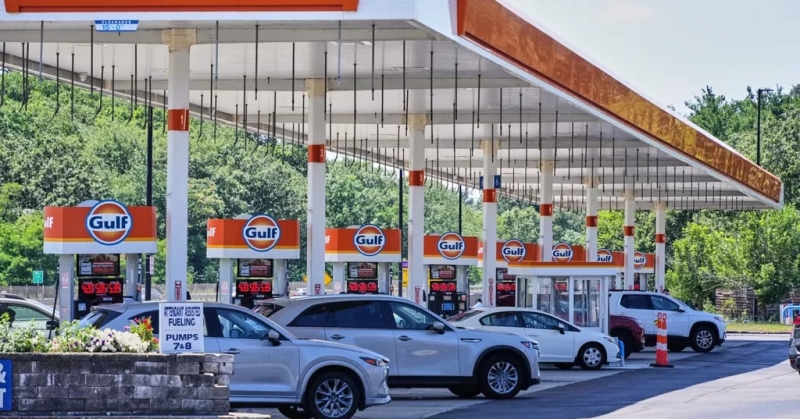
Cars line up at the pumps of a Gulf Oil station on the Massachusetts Turnpike near Boston Sunday, July 19, 2026.
Oil prices fell in early trading on Sunday, extending last week's losses after the United States and Iran refrained from launching military strikes in the Persian Gulf for a second consecutive day, easing immediate concerns over supply disruptions.
Brent crude for September delivery fell 4.9% to $92.02 a barrel shortly after trading resumed, following a 3.9% decline on Friday.
The international benchmark had briefly climbed above $102 a barrel last week, its highest level since May, amid fears that escalating tensions in the Middle East could disrupt global crude supplies.
Oil prices have surged this month as the conflict heightened concerns over the security of the Strait of Hormuz, a strategic waterway through which about one-fifth of the world's oil exports normally pass. Shipping through the route has been severely disrupted since the United States and Israel launched attacks on Iran in late February.
With tanker traffic through the strait curtailed, producers have sought alternative export routes. However, those have also come under pressure following attacks on Saudi oil tankers using the Red Sea.
Higher oil prices have already pushed up fuel costs. In the United States, the average price of regular gasoline stood at $4.11 per gallon on Sunday, compared with $3.90 a month earlier and $3.15 a year ago, according to AAA.
Analysts warn that if crude prices remain elevated, transportation costs could rise further, increasing prices for a wide range of goods, including food and consumer products.
The recent surge in oil prices has also raised concerns about inflation just as price pressures had begun to ease. According to CME Group data, traders now see a 36% chance that the US Federal Reserve could raise interest rates at an upcoming policy meeting.
Higher borrowing costs could weigh on economic activity by making loans more expensive for households and businesses, potentially affecting sectors such as housing and investment in artificial intelligence infrastructure.
Despite Sunday's decline, market participants remain cautious as geopolitical tensions continue to pose significant risks to global energy supplies.
Meanwhile, US benchmark West Texas Intermediate (WTI) crude for September delivery fell 5.6% to $84.34 a barrel after declining 3.1% on Friday.
The most actively traded October Brent contract also dropped 4.6% to $87.48 per barrel.