

- Nation Votes Tomorrow in 13th Poll, Referendum |
- Key in your hands, use it wisely: Prof Yunus tells voters |
- Yunus Urges Voters to Shape a ‘New Bangladesh’ |
- Bangladesh Polls: Campaign Ends as Voters Weigh Pledges |
- Bangladesh Heads to First Gen Z-Driven Competitive Poll |
Commonwealth Hails Smooth Start to Polls
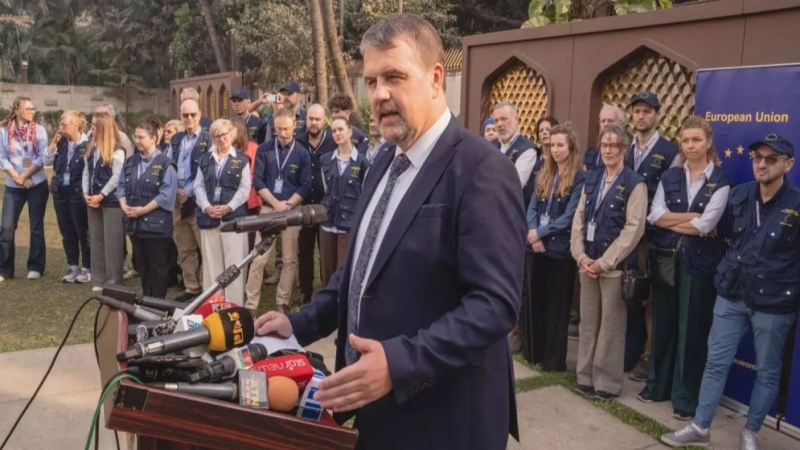
The Chairperson of the Commonwealth Observer Group, Nana Akufo-Addo, has expressed satisfaction over the peaceful start to voting in Bangladesh’s national election and referendum, describing it as an encouraging sign for the day ahead.
After observing the opening of polls at Viqarunnisa Noon School and College on Thursday morning, the former President of Ghana told reporters that the process had begun smoothly. “So far so good,” he said, voicing hope that the orderly atmosphere would continue throughout the day.
He said a credible election would send a strong message to the world and the wider South and Southeast Asian region that Bangladesh is committed to building a democratic future. Such progress, he noted, would be welcomed by democrats across the Commonwealth.
The Commonwealth Observer Group consists of the Chairperson and 12 eminent members drawn from Asia, Africa, the Caribbean, Europe and the Pacific. The team represents a range of professional backgrounds, including politics, civil society, election management, diplomacy and law.
The Group began observing pre-poll preparations after arriving in Dhaka on February 4 and will remain in the country until February 18. It is assessing the pre-election environment, polling day procedures and the post-election process. Members have been deployed to selected divisions to monitor voting, counting and the management of results.
An interim statement outlining preliminary findings is scheduled to be released on February 14.
Akufo-Addo earlier highlighted the importance of youth participation, noting that a large share of Bangladesh’s population is under 35. He said active engagement by young voters is vital for strengthening democratic institutions and could inspire young people across the Commonwealth.
He described the election as taking place at a significant moment, following a period of political debate and public discussion on governance and reform. Democracy, he added, remains a core principle of the Commonwealth Charter, rooted in the right of people to freely determine their political, economic and social systems.
Since their arrival, the observers have held meetings with representatives of political parties, civil society, youth and women’s groups, the media and other stakeholders as part of their assessment process.