

- 109 BGB Platoons Deployed in Dhaka, Five Other Districts |
- Bangladesh-Denmark May form Trade and Investment Committee |
- Bangladesh—Pakistan trade crosses $1 b |
- Dhaka Ranks 5th Among World's Most Polluted Cities on Friday |
- PM seeks to make Bangladesh a reliable brand in global livestock market |
Bangladesh Loses Garment Orders to India Amid Labour Unrest
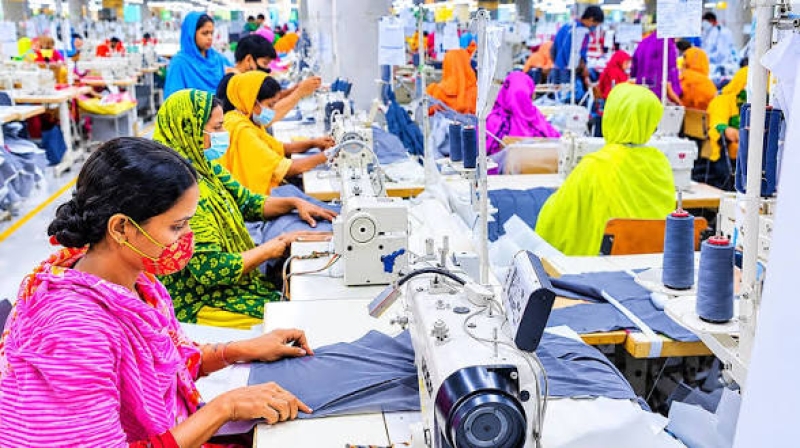
Global fashion brands are shifting garment orders away from Bangladesh amid labour unrest, production disruptions and rising manufacturing costs, with neighbouring India emerging as a major beneficiary.
Brands including Zara, H&M and Marks & Spencer have reportedly shifted garment orders worth around $254 million from Bangladesh during the first 18 days of November, with a significant share going to India.
The development has raised concerns about the competitiveness of Bangladesh's readymade garment (RMG) sector and its future export prospects.
According to a special report published on Friday (November 27), three factory owners said around $254 million worth of garment orders had been diverted from Bangladesh to other countries during the first 18 days of November.
They estimated that around one-tenth of their monthly orders had moved to other Asian countries. The shift could deal a major blow to the garment industry, one of the main pillars of Bangladesh's economy.
Industry insiders say Bangladesh is the world's second-largest garment exporter after China. However, labour unrest, higher wages, energy shortages and political uncertainty have weakened the country's cost advantage, prompting international buyers to consider alternative sourcing destinations.
According to the Bangladesh Garment Manufacturers and Exporters Association (BGMEA), labour unrest has caused more than $400 million in production losses in the garment sector.
The industry accounts for more than 80% of Bangladesh's total export earnings and is linked to around 40% of the country's productive employment.
India, Vietnam and Cambodia emerge as alternatives
India is reportedly benefiting the most from the shift in orders. International buyers are also turning to Vietnam, Cambodia and Indonesia to reduce supply-chain risks and ensure timely deliveries.
The report said Bangladesh announced a 36% increase in the minimum wage for garment workers last Wednesday. However, the increase was the smallest in four decades, while workers had demanded more than double their existing wages.
Protests and clashes with police continued even after the new wage structure was announced.
Abdur Rahman Tarafdar, secretary of the Ministry of Labour and Employment, described the wage increase as satisfactory and expressed hope that all garment workers would return to work from Saturday.
Industry insiders said the new wage structure would further narrow Bangladesh's labour-cost advantage over India. However, workers' organisations argue that wages in Bangladesh remain low by global garment industry standards.
Three factory owners, speaking on condition of anonymity, said labour unrest had prompted international brands including Zara, H&M, Marks & Spencer and Celio to shift orders away from Bangladesh, with a significant share going to India.
The companies, including Inditex, the owner of Zara, H&M, Marks & Spencer and Celio, did not respond to requests for comment.
Meanwhile, shares of several Indian textile companies rose. Following the publication of the report, shares of Gokaldas Exports climbed by as much as 11%, while Trident gained around 5%. Shares of Welspun Living, KPR Mill and Vardhman Textiles also rose by approximately 2%.
BGMEA Director M Mahiuuddin Chowdhury said rising wages, utility bills and raw material costs were putting additional pressure on garment manufacturers.
"When buyers are demanding lower prices and competition from rival countries is intensifying, wage increases have pushed production costs even higher," he said.
BGMEA President Mahmud Hasan Khan declined to identify specific brands but said the industry was trying to retain international buyers and minimise financial losses by temporarily shifting some orders to other countries.
Fears of losing future orders
Factory owners are increasingly concerned that Bangladesh could lose future business as well, beyond the orders already shifted elsewhere.
Buyers are reconsidering which countries can ensure production and delivery within the required deadlines.
Energy shortages have worsened amid the Middle East crisis, disrupting production and forcing some factories to rely on more expensive alternative fuel sources.
Chowdhury said international buyers were now placing greater importance on delivery times than prices when sourcing garments.
"When brands are under pressure to meet delivery deadlines, price becomes a secondary consideration," he said.
He added that India could deliver products around a week earlier than Bangladesh, while Vietnam and Cambodia could reduce delivery times by as much as 15 days.
Production and delivery in these competing countries can generally be completed within 60 to 90 days, compared with around 120 days in Bangladesh.
The report also highlighted production setbacks at factories around Dhaka due to labour unrest, resulting in estimated production losses of 20 to 25 days.
To meet delivery deadlines, some factories are considering extending working hours and shipping products by more expensive air freight.
Khan Monirul Alam, managing director of Alps Apparel Group, a supplier to European brands, said labour unrest had also affected new business.
"Since November 1, most of my buyers have stopped placing new orders. They say orders have been shifted elsewhere, suspended or cancelled. They have already found alternative arrangements," he said.
The report also cited political tensions surrounding the possibility of former prime minister Sheikh Hasina returning to Dhaka from India as another source of concern.
Industry insiders say restoring stability and ensuring uninterrupted production are essential to maintaining the confidence of international buyers.
Chowdhury warned that orders shifted to other countries during periods of instability might not return to Bangladesh even after conditions improve.
"The biggest challenge now is to restore buyers' confidence before temporarily relocated orders become long-term sourcing arrangements. Brands have alternatives. If instability continues, they will not wait for us," he said.