

- Türk warns of increased risk of atrocity crimes on Palestinians |
- ADB Approves $150m Loan for Water Services in Eight Towns |
- Oil Prices Rise Amid Houthi Attack Claim, Hormuz Fears |
- At Least 30 Killed in Fuel Tanker Fire on Egypt Highway |
- US Proposes New Tariffs on Bangladesh, 13 Other Economies |
No blue economy without blue security in the Bay of Bengal
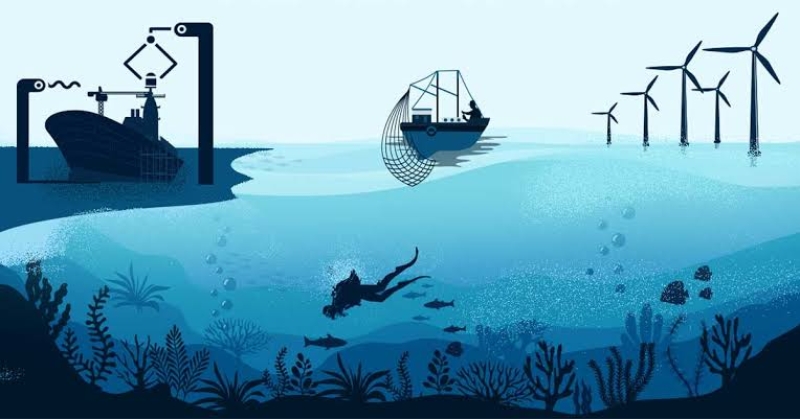
A modern, technology-driven and integrated maritime security framework is essential to harness the vast resources of the Bay of Bengal and transform the blue economy into a major driver of Bangladesh's economic growth.
With economic activities in the maritime domain expanding, maritime security has become increasingly important to protecting national interests, ensuring sustainable use of marine resources and creating a safe environment for domestic and foreign investment.
“Maritime security is not merely a law-enforcement concern but a fundamental prerequisite for the sustainable development of the blue economy,” Director General of the Bangladesh Institute of Maritime Research and Development (BIMRAD) Commodore (retd) Syed Misbah Uddin Ahmed told BSS.
He said effective maritime surveillance, prevention of maritime crimes and protection of the marine environment would boost investors’ confidence and accelerate the development of fisheries, maritime transportation and other ocean-based industries.
However, illegal fishing, marine pollution and transnational crimes remain major challenges to Bangladesh's long-term maritime economic interests, he said, stressing coordinated surveillance, intelligence sharing and joint operations among the Bangladesh Navy, Coast Guard, Department of Fisheries and port authorities concerned.
Commodore (retd) Syed Misbah proposed establishing a separate ministry for maritime affairs and forming an effective inter-agency coordination committee involving relevant ministries and agencies.
He also emphasised strengthening Maritime Domain Awareness (MDA) through the integrated use of radar, Automatic Identification System (AIS), satellite-based monitoring, drones and intelligence information to detect potential threats in real time.
Such technological capabilities would help prevent piracy, drug and arms smuggling, human trafficking and illegal fishing, while improving search and rescue operations at sea, he said.
Bangladesh Coast Guard Media Officer Lieutenant Commander Sabbir Alam Sujan said drones, modern patrol vessels, advanced communication systems and integrated maritime surveillance technologies were creating new opportunities to enhance the force's operational capabilities.
Maintaining round-the-clock surveillance over the extensive coastline, remote char areas and maritime zones through conventional patrols remained a major challenge, he said, adding that the force also conducts operations in rough seas and adverse weather while combating piracy, forest banditry, human trafficking and drug smuggling.
The coast guard has recently intensified intelligence-led operations and patrols across coastal waters, rivers and the Sundarbans, resulting in significant seizures of narcotics, firearms, illegal fishing equipment and smuggled goods.
On November 14, the force seized 410,000 yaba tablets worth Tk 20.5 crore from the Naf River in Teknaf. Earlier, it seized another 10,000 tablets worth Tk 50 lakh from the same area.
On November 23, the Coast Guard detained 101 fishermen and seized five illegal fishing trawlers, 28 fishing nets and 13,200 kilogrammes of marine fish around 20 nautical miles southwest of Saint Martin's Island under Operation Coral Island.
In separate operations, the force also seized foreign liquor, cannabis, fertiliser and cement allegedly being smuggled through coastal routes.
Anti-piracy operations in the Sundarbans have also been intensified under Operation Restore Peace in Sundarbans and Operation Mangrove Shield.
Between January 1 and November 20, the coast guard arrested 43 pirates, secured the surrender of 64 members of different pirate gangs and recovered 82 firearms. Another 48 firearms were surrendered by gang members.
During the period, the force rescued 63 fishermen, two tourists and a resort owner from pirate captivity.
In a separate operation on November 17, it recovered 10 single-barrel guns, two air guns, two locally made one-shooter firearms, gun barrels, ammunition and walkie-talkie sets from the Sundarbans.
The development of marine fisheries, seaports, maritime transportation, shipbuilding, tourism and ocean-based energy largely depends on a secure and stable maritime environment.
Against this backdrop, modern offshore patrol vessels, advanced radar systems, drones, satellite-based surveillance, skilled manpower and stronger regional cooperation are essential to building an effective maritime security framework.
Ensuring maritime security, protecting the marine environment, and promoting sustainable resource utilisation and investment will be crucial to translating the vast potential of the Bay of Bengal into long-term economic prosperity, reports BSS.