

- Ctg Port’s historic milestone in 2025 container handling, revenue |
- NBR Probes Bank Records of 100 Exporters Over Bond Abuse |
- Hadi murder case: Sanjay, Faisal give ‘confessional’ statements |
- Islami Bank organizes orientation for 1000 Trainee Assistant officers |
- 2025: People’s Resistance Against Hydro Projects in Himalaya |
Jaishankar’s Dhaka Visit Signals Post-Poll Reset in Ties
Despite the current political tension between Bangladesh and India, bilateral relations are expected to witness an overall improvement in the coming days, particularly after Bangladesh forms a political government through the next parliamentary elections scheduled for February 12, 2026, according to politicians, diplomats, policymakers and business leaders.
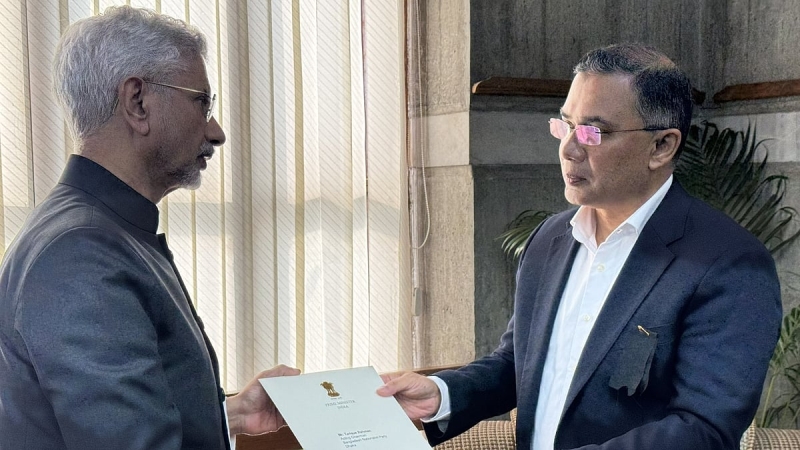
Indian External Affairs Minister S Jaishankar arrived in Dhaka on Wednesday to formally hand over a condolence message from the Indian government to BNP Acting Chairperson Tarique Rahman at the Jatiya Sangsad Bhaban.
This marked Jaishankar’s first visit to Bangladesh since former Prime Minister Sheikh Hasina—considered India’s most trusted partner—stepped down on August 5, 2024 following a mass movement led by students and the public.
“On arrival in Dhaka, met with Mr Tarique Rahman, Acting Chairman of BNP and son of former Prime Minister Begum Khaleda Zia. Handed over to him a personal letter from Prime Minister Narendra Modi,” Jaishankar wrote in a post.
After delivering the condolence message, Jaishankar attended the funeral of former Prime Minister and BNP Chairperson Begum Khaleda Zia as a representative of the Indian government.
“Expressed confidence that Begum Khaleda Zia’s vision and values will guide the development of our partnership,” Jaishankar wrote on his verified Facebook page following the meeting.
He also conveyed his deepest condolences on behalf of the government and people of India.
Earlier, the Indian foreign minister arrived in Dhaka on a special flight at around 11:30am to attend the funeral.
In a Facebook post, BNP said India had expressed deep respect at the passing of Begum Khaleda Zia, describing her as the “Mother of Democracy” and a “symbol of courage and struggle,” committed to safeguarding independence and sovereignty.
Foreign Adviser Md Touhid Hossain said Dhaka viewed Jaishankar’s visit positively, describing it as a gesture of respect for the three-time prime minister and BNP chairperson, who passed away on Tuesday morning.
Asked whether the visit would help improve strained relations between the two neighbours, he said only time would tell.
He noted that Begum Zia was not only a popular leader in Bangladesh but also highly respected across South Asia, as reflected in the presence of regional representatives at her funeral.
Meanwhile, Indian Defence Minister Rajnath Singh visited the Bangladesh High Commission in New Delhi and signed the condolence book, expressing profound sorrow. “Our thoughts are with her family and the people of Bangladesh,” he said.
Several regional dignitaries, including Pakistan National Assembly Speaker Sardar Ayaz Sadiq, Nepal’s Foreign Minister Bala Nanda Sharma and Bhutan’s Foreign Minister DN Dhungyel, also arrived in Dhaka to attend the funeral.
Law Adviser Dr Asif Nazrul and National Security Adviser Dr Khalilur Rahman met the visiting dignitaries at the Jatiya Sangsad Bhaban and thanked them for their solidarity during the period of national mourning.