

- GK irrigation pump station being redesigned as Ganges water levels fall |
- New School Curriculum to Launch in 2028 |
- Iran Halts Israel Strikes, Warns of New Action |
- Bangladesh Trade Deficit Rises $8bn in Five Years |
- New BSEC chairman commits to IPO reform, digitalisation |
US envoy, ICC Bangladesh discuss trade and investment
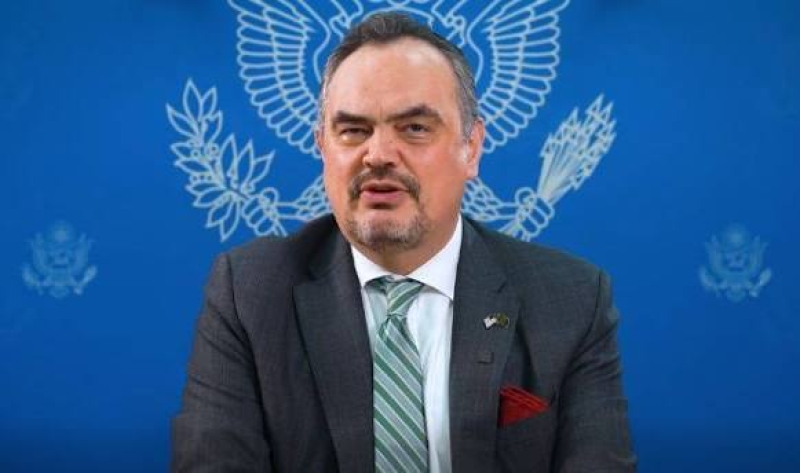
US Ambassador in Dhaka Brent T. Christensen today exchanged views with International Chamber of Commerce-Bangladesh (ICC Bangladesh) on bilateral trade and investment exploring ways to strengthen further economic and commercial relations between the two countries.
An ICC Bangladesh statement said the chamber hosted the talks with the envoy at its secretariat in the capital when its president Mahbubur Rahman reviewed longstanding Bangladesh-US economic partnership and emphasized the importance of expanding trade, investment and private-sector cooperation between them.
According to the statement Christensen acknowledged that the recently concluded Bangladesh–United States Agreement on Reciprocal Trade (ART) generated “public debate and media scrutiny” but said these were natural elements of the policymaking process.
The ambassador said though the agreement generated differing views, “its objective is to foster a more balanced, sustainable and mutually beneficial economic partnership between the two countries”.
“He (envoy) expressed confidence that the framework would create new opportunities for businesses and consumers in both markets,” the statement said.
It said Rahman, however, described the ART as an “important step towards building a more balanced and mutually beneficial economic partnership”.
The ICC-Bangladesh president informed the ambassador of Bangladesh’s growing demand for US cotton and underscored the importance of strengthening “supply-chain traceability and sustainability in the apparel sector”.
Rahman said greater utilization of US cotton could further enhance Bangladesh’s competitiveness and compliance credentials in global markets.
The chamber president noted that Bangladesh undertook significant commercial purchases from the United States that included Biman Bangladesh Airlines’ order for 14 US-made Boeing aircraft, increased imports of agricultural commodities and cotton, and long-term commitments in the energy sector.
According to the statement Christensen acknowledged Bangladesh’s remarkable economic progress over recent decades and described the country as one of the world’s fastest-growing economies.
“He (ambassador) noted the strong and evolving economic relationship between Bangladesh and the United States and emphasized the substantial opportunities for further collaboration in trade, investment and business development,” it read.
Christensen highlighted the importance of addressing non-tariff barriers and strengthening the business and regulatory environment to facilitate greater economic engagement.
“He (envoy) emphasized the value of constructive dialogue, negotiation and continued engagement between governments and the private sector to address trade-related challenges and identify practical solutions,” the statement said.
He also underscored the need for countries and businesses to adapt to changing economic realities, evolving trade policies and emerging market requirements.
Christensen also stressed the importance of transparency, predictability and efficiency in taxation and customs administration, highlighting the role of institutions such as the National Revenue Board (NBR) in supporting trade facilitation and investment.
He expressed support for Bangladesh’s ongoing economic reforms and encouraged continued efforts to enhance competitiveness and improve the process to ease of doing business and strengthen private-sector development.
“Ambassador Christensen reaffirmed the commitment of the United States to working closely with Bangladesh to deepen economic cooperation, expand commercial ties and unlock new opportunities for sustainable growth and prosperity in both countries,” the statement said.
The ambassador was accompanied by US embassy’s Political and Economic Counselor Eric Geelan and Economic Specialist Asif Ahmed.
Business leaders Rupali Chowdhury, Rubana Huq, Md Fazlul Hoque, AK Azad, Naser Ezaz Bijoy, Aftabul Islam, Anwar-Ul-Alam Chowdhury Parvez, Kamran T Rahman, Md Fazlul Hoque, Mir Nasir Hossain, Mohammad Hatem, Showkat Aziz Russell, Tapan Chowdhury, Jashim Uddin, Syed Ershad Ahmed, Muhammad A. Rumee Ali and ICC secretary general Ataur Rahman attended the meeting as well, reports BSS.