

- Bangladesh stocks end week higher on upbeat mood |
- BDR name will be restored, army won't be used for politics: Tarique |
- Hili land port highway upgrade delayed again, cost Tk 588cr up |
- Tarique vows quick execution of Teesta Master Plan if elected |
- How Undecided voters May Decide the Election |
Community Safety in Bangladesh Needs Stronger Local Action
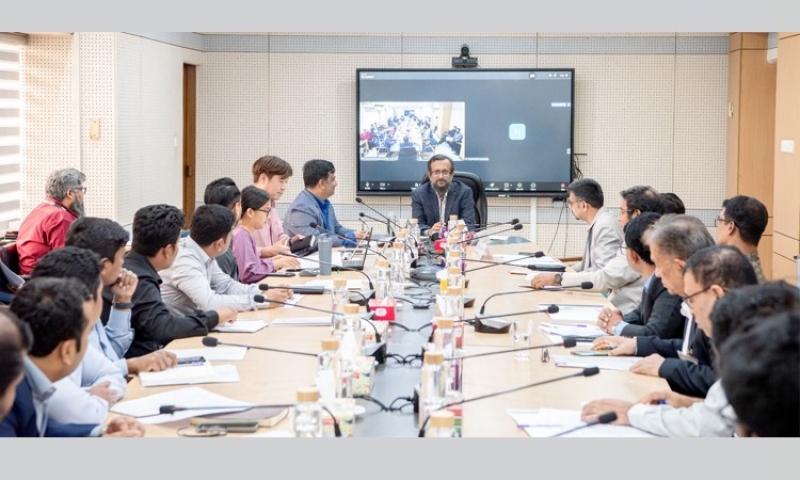
Experts have stressed the need for stronger community-based and environment-focused crime prevention strategies alongside traditional policing to improve safety in Bangladesh. They noted that effective crime prevention must begin with enhancing surveillance, strengthening territorial responsibility, and designing neighbourhoods that deter criminal opportunities.
An international seminar titled ‘Building Resilient Communities and Improving Living Environment in Bangladesh’ was held today at PKSF Bhaban-1 in Agargaon. The event emphasised community participation, daily monitoring, and the use of digital tools to build safer living environments and strengthen long-term prevention efforts.
PKSF Managing Director Md Fazlul Kader delivered the welcome speech, while Professor Dr Md Taufiqul Islam, a governing body member of PKSF, offered the vote of thanks.
Keynote presentations by Dr Tomoo Okubo and Dr Shiho Tanaka of Kagawa University, and Dr Naonori Kusakabe of Rikkyo University, highlighted ICT-based crime prevention education and community support models tailored for Bangladesh.
Speakers presented a framework grounded in crime opportunity theory, which suggests that crime often stems from environmental vulnerabilities rather than individual motives. They said communities can deter opportunistic crimes by ensuring environments are visible, well-used, and free from concealed or poorly monitored spaces.
The seminar underscored the importance of collective responsibility, community strength, and social interaction in maintaining public safety. Participants also highlighted the value of youth engagement and university-led patrol teams in hotspot monitoring, improving school route safety, and raising awareness through digital platforms and field-level workshops—initiatives that help address declining volunteer participation.
Experts further contrasted crime cause theory, which focuses on offenders’ motivations, with crime opportunity theory, which examines weaknesses in the environment that enable crime. They noted that parks, walkways, neglected areas, and poorly maintained urban spaces often become hotspots when they are “easy to enter and difficult to see.”
A major focus of the seminar was the use of ICT-based tools, including the “Miimai” crime prevention walking app. The platform allows residents to mark safe and unsafe areas, report concerns in real time, and avoid high-risk locations—promoting a culture of “watching while walking” and extending traditional community safety mapping into the digital space.