

Thursday, September 24, 2026
News update
- PM Proposes Five Urgent Steps to Resolve Rohingya Crisis |
- Govt Appoints Indonesian Firm to Operate Cox’s Bazar SPM |
- ADB lowers Bangladesh’s growth forecast to 4 % in FY2027 |
- El Niño Tests Global Readiness for a Changing Climate |
- Dhaka's air quality recorded moderate on Wednesday morning |
ECNEC Eyes Tk 2,082cr Rural Road Maintenance Project
Staff Correspondent:
Development
2026-07-21, 1:27pm
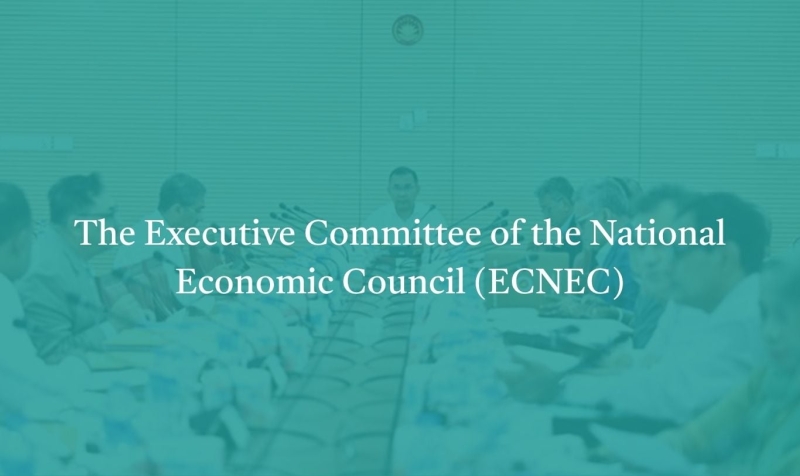
The Executive Committee of the National Economic Council (ECNEC) is likely to consider a Tk 2,082.12 crore government-funded project to maintain rural roads across the country while creating employment opportunities for thousands of poor rural women.
According to the project summary prepared by the Planning Commission, the proposed “Rural Road Maintenance and Employment Project” will be implemented by the Local Government Engineering Department (LGED) under the Local Government Division by December 2029 at a total estimated cost of Tk 2,082.12 crore, entirely financed by the government.
ECNEC Chairman and Prime Minister Tarique Rahman will preside over the ECNEC meeting set to be held tomorrow (Wednesday).
Talking to BSS, Planning Commission Member (Agriculture, Water Resources and Rural Institutions Division) Md. Mahmudul Hossain Khan said that the roads under the LGED earlier went through a wider scale maintenance in 1983 and 1984 and then during the 2003-2007 period.
After that, there were no such large-scale maintenance work and considering the matter, the draft project has been prepared to cover the 495 upazilas of the 64 districts.
Terming the project as ‘poor women friendly’ ultimately resulting into women empowerment, Md. Mahmudul Hossain Khan also informed that the project aims to keep 91,560 kilometres of rural roads suitable for communication throughout the year through regular maintenance and generate employment for 45,780 poor women who are heads of households, improving the socio-economic condition of an equal number of disadvantaged families.
Another Planning Commission official (wishing not to be named) said Bangladesh’s rural economy depends heavily on an efficient road network for transporting agricultural and non-agricultural products to markets. Regular maintenance of rural roads is therefore essential for ensuring year-round connectivity, facilitating trade and supporting rural economic development.
The proposal builds on the success of earlier rural road maintenance programmes. The initiative began in 1983 as a pilot project in seven unions with support from the Canadian International Development Agency (CIDA) through CARE Bangladesh.
It was later expanded nationwide with assistance from the European Union before evolving into successive Rural Employment and Road Maintenance Programmes (RERMP), including RERMP-1, RERMP-2 and RERMP-3. The latest phase was implemented by LGED between 2019 and 2024 with full government financing.
Based on the success of those programmes, the Local Government Division has proposed the new project to sustain rural connectivity, facilitate marketing of agricultural and non-agricultural products, reduce poverty through women’s employment and improve the overall quality of life in rural areas.
Under the project, LGED will undertake regular maintenance of 91,560 kilometres of rural roads across 495 upazilas in all 64 districts under the country’s eight divisions.
Project areas have been selected based on indicators such as the Climate Vulnerability Index (CVI), Poverty Index and Environmental Hazard Index, with priority given to improving rural connectivity and expanding social protection through women’s employment.
The Planning Commission said the project is aligned with the government’s election manifesto, particularly commitments relating to poverty reduction, agricultural development, nationwide employment generation and ensuring “last-mile” connectivity in remote areas.
The project is also consistent with the Sustainable Development Goals (SDGs), especially SDG 1 (No Poverty), SDG 2 (Zero Hunger and Sustainable Agriculture) and SDG 9 (Industry, Innovation and Infrastructure).
A feasibility study conducted by Ideal Design & Consultancy recommended implementation of the project, and its findings have been incorporated into the Development Project Proposal (DPP).
Although no financial cost-benefit analysis was carried out because of the project’s service-oriented nature, the Planning Commission noted that the strong performance of previous RERMP projects indicates the proposed programme is expected to deliver significant socio-economic benefits.
The proposed annual expenditure includes Tk 522.89 crore in FY2026-27, Tk 519.31 crore in FY2027-28, Tk 518.65 crore in FY2028-29 and Tk 520.75 crore in FY2029-30, with a nominal allocation in FY2025-26.
The Project Evaluation Committee (PEC), at its meeting on March 1, 2026, recommended the
project for approval after revising the implementation schedule, rationalising procurement and operational costs, ensuring compliance with public procurement rules, preparing an exit plan for post-project maintenance and preventing duplication with other ongoing development programmes.
The Planning Commission said the project would ensure year-round rural road connectivity, facilitate the transportation and marketing of agricultural and non-agricultural products, create employment for 45,780 disadvantaged women, and contribute significantly to poverty reduction and the socio-economic development of rural Bangladesh.
The Commission has recommended the project for ECNEC approval for implementation by December 2029 at an estimated cost of Tk 2,082.12 crore, fully financed by the government, reports BSS.