

- Cultural institutions face leadership vaccum, governance questions |
- Ishraque Hossain Announces Resignation as State Minister |
- PM Opens July Memorial, Renovated Osmani Udyan in Dhaka |
- SPM Contract Cost Rises by $31m Despite Tender Rules |
- Cabinet Approves Secretariat Relocation to Sher-e-Bangla Nagar |
Cultural institutions face leadership vaccum, governance questions
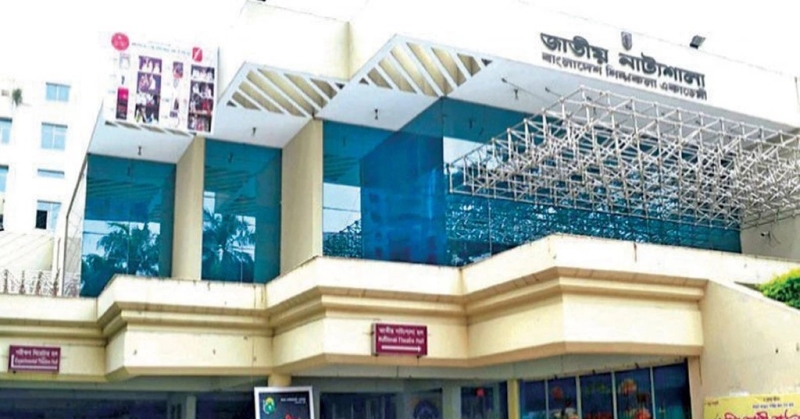
The National Drama House of Bangladesh Shilpakala Academy
Md Ishtiak Hossain
Dhaka, Oct 19 – Uncertainty over leadership appointments and governance arrangements is emerging as a challenge for several of Bangladesh’s major cultural institutions, raising questions about administrative accountability, institutional continuity and long-term planning.
The situation at the Bangladesh Shilpakala Academy (BSA), Bangla Academy, National Poet Kazi Nazrul Islam Institute and Bangladesh Shishu Academy reflects different aspects of the problem, from the absence of regular leadership to unresolved appointments and incomplete governing structures.
At Bangladesh Shilpakala Academy, the country's principal state institution for the promotion of fine arts and performing arts, successive changes in leadership have left the administration dependent on temporary arrangements.
The academy has seen two changes in its Director General's position since the political transition in August 2024. Eminent theatre personality and academic Syed Jamil Ahmed, who was appointed during the interim government, resigned in February 2025. Poet Sheikh Rezauddin Ahmed, popularly known as Rezauddin Stalin, subsequently assumed the role, but his contractual tenure has also ended.
The Ministry of Cultural Affairs later assigned Joint Secretary Mohammad Harun-or-Rashid additional responsibility as Director General.
Questions have also arisen over the effectiveness of the academy's governing board after several members resigned from a board constituted following the 2024 political change. The resulting uncertainty has prompted concerns about institutional oversight and continuity in decision-making.
At Bangla Academy, the Presidency has remained vacant since the death of noted writer, researcher and literary critic Professor Abul Quasem Fazlul Huq on July 5, 2026.
Huq had been appointed President for a three-year term in October 2024. His death left the position vacant, although the academy's executive administration continues under Director General Professor Mohammad Azam, who was appointed on September 5, 2024.
The absence of a President has left an important leadership appointment unresolved at one of the country's principal institutions for Bangla language, literature and research.
The National Poet Kazi Nazrul Islam Institute is facing a different question concerning the status of its executive leadership.
Renowned lyricist, writer and playwright Latiful Islam Shibli was appointed Executive Director on a two-year contractual term beginning in September 2024. His tenure reached its scheduled end in September 2026. Shibli confirmed his exit from the position on his Facebook.
The institute's official website, however, continued to list him as Executive Director. No subsequent appointment or renewal order was identified in the public sources reviewed for this report.
Bangladesh Shishu Academy, which works to promote children's cultural development, is also awaiting a complete leadership arrangement.
Joint Secretary Arju Ara Begum of the Ministry of Women and Children Affairs was assigned responsibility as Director General after the previous leadership was removed following the political transition of August 2024. The Chairman's position, however, has remained vacant, which was previously hold by noted cultural personalities including the last Chairman Lucky Enam and her predecessor, Selina Hossain.
Sources familiar with the matter said four members had recently been nominated to the academy's governing board following a meeting at the Ministry. A decision on the appointment of a Chairman had yet to be made.
The incomplete leadership structure has raised questions about the board's ability to provide effective oversight and long-term direction to the institution.
Taken together, the developments point to the importance of timely appointments, transparent decision-making and clear lines of administrative responsibility. Cultural institutions require stable governance not only to maintain routine operations, but also to preserve heritage, support artists-performers- writers-directors and technicians, develop audiences and implement programmes beyond individual tenures.
Four cultural personalities, speaking on condition of anonymity to UNB, expressed concern over what they described as inadequate oversight and arbitrary decision-making in some autonomous institutions. They called for transparent measures to restore effective governance and strengthen the institutions' engagement with the wider cultural community.
According to the Cultural Affairs Ministry, the aforementioned vacant positions of its particular wings would be filled soon, citing legal issues that needed to be addressed. - UNB