

- Next President Likely From BNP Standing Committee |
- Resignation of President Mohammed Shahabuddin for ill health |
- Why President Shahabuddin resigned from office |
- President Mohammed Shahabuddin Resigns |
- Experts Call for Better Flood Forecasting, Urban Planning |
US Fires on Merchant Ship as Iran Tensions Escalate
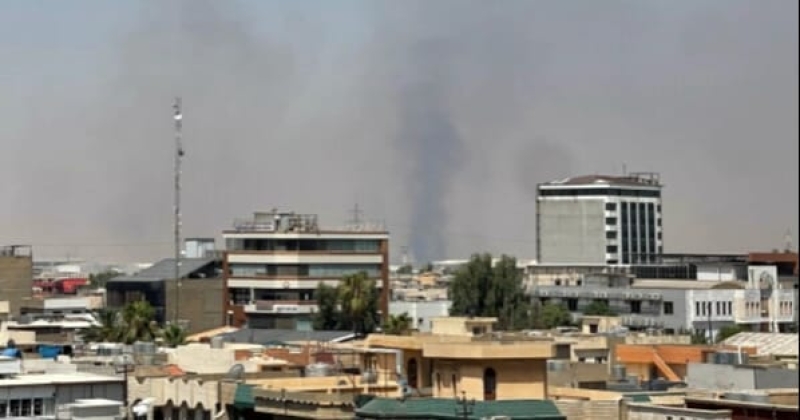
The United States said on Friday that its forces fired on and disabled a merchant vessel accused of attempting to breach a blockade of Iranian ports, while Iran launched attacks targeting US military positions across the Persian Gulf region.
The conflict showed no signs of easing after 13 consecutive nights of hostilities, with both sides signalling readiness for further escalation. US embassies across the Middle East warned Americans that evacuation options could become more limited, while Iran's Revolutionary Guard urged residents of neighbouring countries to avoid areas near US military bases.
The Saudi-led coalition also reported carrying out strikes on Yemen's Hodeida port after Iran-backed Houthi rebels attacked Saudi oil tankers in the Red Sea. The Houthis vowed to intensify their operations amid the escalating regional conflict.
US Central Command spokesman Capt. Tim Hawkins said American forces disabled the merchant vessel M/T Lavine in the Gulf of Oman after it allegedly attempted four times to breach the blockade despite repeated warnings. He said US forces fired into the ship's engine room after the crew ignored commands. It was the second commercial vessel disabled since the blockade was reimposed.
Earlier on Friday, President Donald Trump met senior national security officials to review the situation and discuss whether to maintain or expand military operations, according to a US official. No decisions were announced after the meeting. Speaking later from the Oval Office, Trump described negotiations with Iran as the most serious so far but said he was "not in a hurry" to end the conflict.
Iranian Foreign Minister Abbas Araghchi rejected what he described as US pressure, saying Tehran would not surrender to threats. He also said Iran remained in close consultation with China and Russia.
The Strait of Hormuz remained at the centre of the confrontation, with continued disruption to shipping fuelling concerns over global energy supplies and the world economy.
In Iraq, security officials said US-led forces intercepted five explosive drones over Irbil, where American military advisers are stationed. Iran's Revolutionary Guard also claimed responsibility for attacks on the US Udairi base in Kuwait and a watchtower linked to the US Navy's Fifth Fleet in Bahrain, although US Central Command did not confirm those claims.
Bahrain and Jordan separately reported intercepting Iranian aerial attacks. Meanwhile, Iranian media said US strikes targeted a Revolutionary Guard naval base in northern Iran, as well as military-related sites on Qeshm Island and in Isfahan, Khuzestan and Fars provinces.
US Central Command said the strikes were intended to reduce Iran's ability to threaten commercial shipping and restore safe passage through regional waterways.
Diplomatic efforts continued as an Omani delegation visited Tehran for talks on maritime security in the Strait of Hormuz. However, no breakthrough was announced. Iranian officials argued that any progress would require a change in Washington's position.
Saudi Arabia also reported another attack on one of its vessels in the Red Sea, causing minor damage. Houthi media said subsequent Saudi airstrikes hit telecommunications facilities and Kamaran Island in Yemen, injuring civilians. Riyadh vowed to continue responding to attacks, while Trump warned of severe military action if Houthi assaults on shipping persisted.
The Bab el-Mandeb Strait, another vital global shipping route, has also come under increasing pressure. Around 12% of global trade and roughly one-quarter of the world's container traffic normally passes through the waterway.
Energy markets remained volatile, with Brent crude trading around $96 per barrel, while the average US gasoline price rose to $4.11 per gallon, according to the American Automobile Association (AAA).
The humanitarian toll also continued to mount. Iran's Health Ministry said 3,434 people had been killed since the conflict began. The International Maritime Organization said about 6,000 seafarers remained stranded aboard nearly 400 vessels near the Strait of Hormuz, while the UN human rights office warned that some crews had been left without adequate food, water, fuel, electricity, medical care or communication.
The conflict began after the United States and Israel launched attacks on Iran on February 28, with Washington saying the operation was aimed at curbing Iran's nuclear capabilities. Israeli Prime Minister Benjamin Netanyahu is expected to visit the United States next week for talks with President Trump.