

- Iran Launches Gulf Attacks as Khamenei Is Buried |
- 16 Bangladeshis Die in Mideast, Russia: Minister |
- Measles: With 2 more suspected deaths; toll reaches 746 in BD |
- Dhaka hopes India will come forward on Ganges Water Treaty |
- Rising water levels in three Feni rivers trigger fresh flood fears |
Iran Launches Gulf Attacks as Khamenei Is Buried
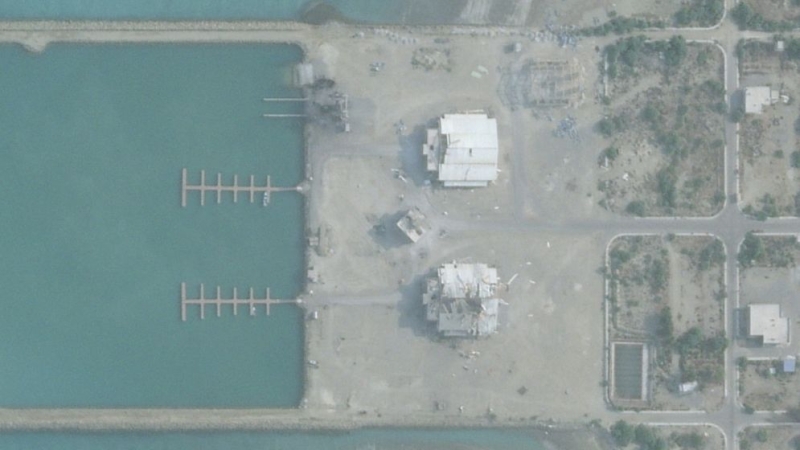
A closer view of the satellite imagery shows damage to an Iranian port building following recent US strikes in Sarkhur Tahruyi, Hormozgan Province, Iran, on 9 July 2026.
Iran launched strikes on US military facilities across the Gulf on Thursday, saying the attacks were retaliation for recent American airstrikes on its territory, as tensions between the two countries escalated despite a fragile ceasefire.
The attacks coincided with the funeral of Iran's Supreme Leader Ayatollah Ali Khamenei, who was killed in a US airstrike at the start of the conflict on February 28. Thousands of mourners gathered in the holy city of Mashhad, where he was laid to rest after days of nationwide funeral processions.
Iran's armed forces said they targeted US military installations in Kuwait, Qatar and Bahrain, including Patriot missile systems, an early-warning facility and a fuel storage site used by US forces.
Kuwait said its air defence systems intercepted a cruise missile, three ballistic missiles and 10 drones that entered its airspace. One person was reportedly injured by falling debris.
Jordan also confirmed intercepting several missiles that crossed into its airspace, saying no casualties or property damage had been reported.
Iran's Revolutionary Guards warned that any further US military intervention would trigger a "crushing response." The force also said commercial shipping through the Strait of Hormuz was gradually recovering under Iranian supervision, with vessel traffic reaching about half of pre-war levels. It added that only vessels using routes authorised by Tehran were being permitted to transit the strategic waterway.
Iranian authorities said recent US strikes killed 14 people and injured 78 others across five provinces. Officials reported that attacks hit military facilities, a fishing dock in Bushehr province and the perimeter of the Bushehr nuclear power plant. There were no immediate reports of damage to the plant's reactor.
The US military said its latest operation struck about 90 Iranian military targets, including air defence systems, missile and drone storage sites and coastal surveillance facilities. Washington said the operation was intended to safeguard maritime navigation after accusing Iran of attacking commercial vessels near the Strait of Hormuz.
US President Donald Trump described the strikes as retaliation for attacks on shipping and warned that any further Iranian action would be met with a stronger response. However, he said he did not expect the latest exchange of attacks to escalate into a prolonged war.
The renewed hostilities have heightened concerns over regional security and global energy supplies. Although oil prices initially surged on fears of supply disruptions, they later eased as investors assessed whether the latest escalation would remain contained or lead to a wider collapse of the ceasefire.