

- Thousands of tourists flock to Kuakata during Eid festival |
- 45th anniversary Ziaur Rahman's death Saturday |
- India’s Muslims denied public spaces for Eid prayers |
- China steps up efforts to protect rare golden monkeys at world heritage site |
- Russia urges US, Iran to avoid return to war amid nuclear tensions |
US, Iran Reach Truce Extension Deal, Await Nod
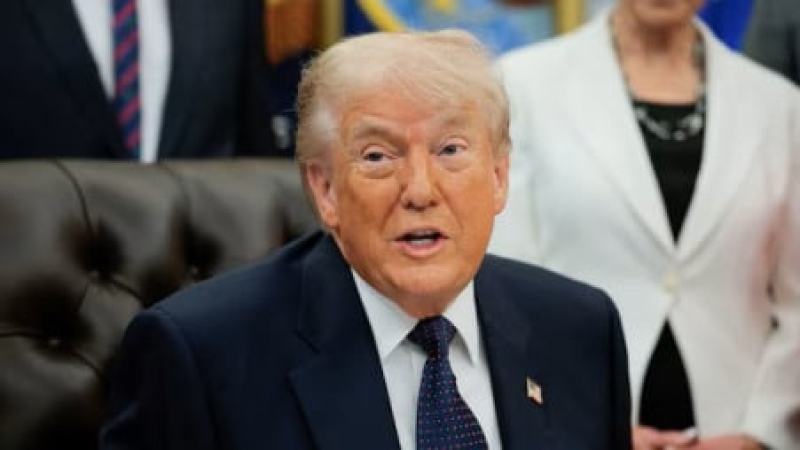
US President Donald Trump speaks during an event to sign a memorandum in the Oval Office at the White House in Washington, DC, US, 5 May 2026.
The United States and Iran have reached a preliminary agreement to extend their ceasefire and ease restrictions on shipping through the Strait of Hormuz, although the proposal still awaits approval from US President Donald Trump and has yet to be formally finalised by Tehran.
Sources familiar with the negotiations said the proposed deal would extend the truce by another 60 days and reopen the strategic waterway to unrestricted shipping while both sides continue discussions on unresolved issues, including Iran’s nuclear programme.
If endorsed by leaders in Washington and Tehran, the agreement could mark the most significant diplomatic breakthrough since hostilities erupted on February 28.
The development follows renewed exchanges of attacks between the two sides, despite a ceasefire that took effect in early April. Although the latest incidents were limited, they underscored the fragile nature of the truce and ongoing diplomatic efforts.
Iranian state-linked media reported that the agreement text had not yet been finalised, while US Vice President JD Vance said negotiators were “very close” to reaching a deal but cautioned that no outcome was guaranteed.
Under the reported framework, shipping through the Strait of Hormuz — a vital route for nearly one-fifth of global oil and liquefied natural gas supplies — would continue without restrictions. The US would also ease its blockade of Iranian ports and lift some sanctions on Iranian oil exports.
The prospect of an agreement pushed oil prices lower, as markets reacted positively to hopes of stability in one of the world’s most critical energy corridors.
Meanwhile, military tensions persisted. US Central Command said it intercepted several Iranian drones and targeted a launch facility near the port city of Bandar Abbas to prevent another attack. Kuwait also reported intercepting a ballistic missile allegedly fired toward its territory.
A US official denied reports from Iranian state television claiming an American aircraft had been shot down near Bushehr, describing recent military actions as defensive measures aimed at preserving the ceasefire.
Iran’s Islamic Revolutionary Guard Corps warned of a stronger response if further attacks occur, while Kuwait condemned the missile launch and called for an immediate halt to escalation.
The conflict has disrupted regional stability and global energy markets for months, with thousands reportedly killed since fighting began.
Diplomatic efforts are continuing, with regional mediators seeking to preserve the ceasefire and push both sides toward a broader peace agreement. However, major sticking points remain, including sanctions relief, regional military presence, and the future of Iran’s nuclear activities.