

- 21 Killed in New Delhi Hotel Fire, Many Foreign Victims |
- UNHCR, partners ask world not to forget Rohingya refugees in BD |
- WMO Warns El Niño to Drive Global Extreme Weather |
- SEC to be restructured with new leadership team: Finance Minister |
- ‘May no other parent lose a child this way’, says Ramisa’s father |
Street children need to be brought back from drug addiction
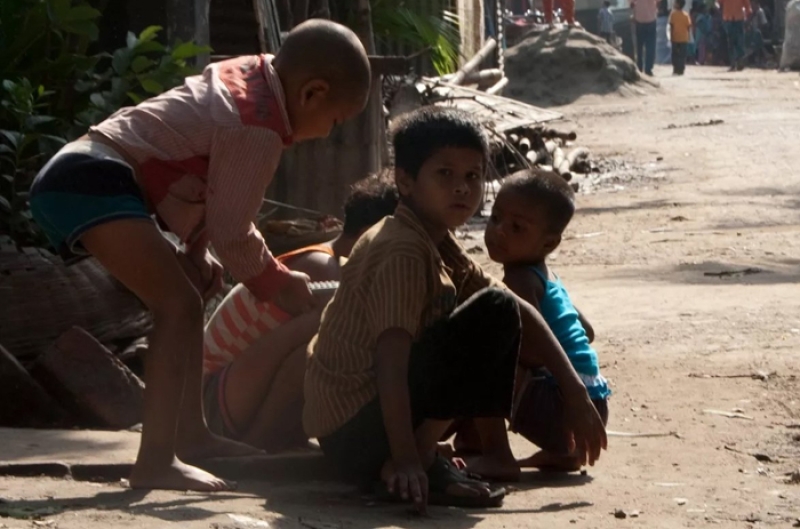
Street children in Bangladesh, particularly in the capital Dhaka, are increasingly becoming involved in drug abuse as they struggle to survive without family support, shelter, or financial security.
Those who were once commonly called as “Tokai” two, three or even four decades ago are now known as street children. Most of them are homeless due to the absence of parents or family members and live without any fixed address or structured life.
In Dhaka and other cities across the country, these children prefer to live independently in their own way. However, while trying to survive on the streets, many of them are becoming involved with drugs, willingly or unwillingly. No child chooses to become a street child voluntarily; rather, poverty and difficult family circumstances force them into such a life.
These children are engaged in some of the lowest-paid jobs in society. In Dhaka city, many can be seen selling flowers at traffic signals, cleaning vehicles, collecting polythene bags from dustbins, or carrying sacks on their backs to gather paper and plastic bottles. While each child does different work, many people remain unaware that a significant portion of their earnings is spent on drugs. For many of them, consuming narcotics before sleep has become a form of escape and comfort.
Recently, at an alley near the Green Road-Panthapath intersection in the capital, two street children aged around 10 to 12 years were seen smoking cannabis in the afternoon. One of them was deeply observing the other while they smoked openly without concern.
When approached and asked what they were doing, one of the boys quickly replied, “Can’t you see what we are doing?” Despite the surprising response, this correspondent sat beside them and began talking.
One of the children identified himself as Sohag, while the other said his name was Mohan. Neither of them has parents. They sleep on footpaths at night or sometimes near the gate of Comfort Hospital.
During the day, they collect recyclable materials from dustbins and sell them at several shops in Kathalbagan.
The two spend almost all their time together like inseparable companions. At the end of the day, they hand over their earnings to an older “brother,” who in return provides them with food and drugs such as cannabis and Dandy (shoe glue).
Explaining why he takes drugs, Sohag said, “I have no parents. My father died when I was two years old. My mother remarried a rickshaw puller, but he did not want me. My mother left and I only cried. One day, suffering from hunger, I started begging on the streets.
I continued begging for several days because I was incapable of doing anything else. But after some time I realized I could not survive that way. Then I decided to collect waste paper. Even that was not enough to buy food, so I started collecting other useful items from dustbins as well.
Whatever I earn from working all day goes to that elder brother. He buys me food and cannabis. That is how we survive.”
Asked whether he wanted to study, Sohagreplied, “How is that possible?” Another child, Mohan, added, “Those things are not for us. We only need food and sleep.”
Another street child named Rajan said that many children in the area consume cannabis, sleeping pills known as “Chakki,” and Dandy.Some also inject drugs.
He added that other narcotics such as Noktinpills and Gul are also available in the area. “Almost all the boys here consume those substances, but we only take cannabis and Dandy,” he said.
In another nearby alley, several more street children were seen taking drugs openly on the roadside.
Dandy has now become one of the most popular drugs among street children because it is cheap and easily available. A bottle of Dandy costs between Taka 170 and Taka 200.
Statistics show that Bangladesh currently has around one million street children, half of whom are under the age of 10. Nearly 95 percent of these children are reportedly involved in drug abuse.
Syeda Anannya Rahman, Programme Manager of anti-drug organisation Work for Better Bangladesh, said the government has declared war against drugs. “If we fail to protect the country from the grip of drugs, our future will be dark. These children are our future generation. Street children can easily obtain drugs, so we must effectively enforce relevant laws.
However, public awareness against drugs must be increased first,” she said.
She also urged the government and affluent members of society to come forward to rehabilitate these street children and bring them back to a proper path.
Human rights activist Nur Khan said no one becomes a street child willingly. “We must focus first on ensuring that no child becomes a street child. For this, society itself must change. This is not something the government alone can solve. Everyone in society must come forward,” he said.
He said that merely enforcing laws would not stop street children from taking drugs. “Proper work opportunities must be arranged for them so they can earn honestly and lead their lives. Awareness and campaigns are necessary. The government, NGOs and all sections of society must work together to keep street children away from drugs,” he added, reports BSS.