

- ICJ asks Myanmar: cease violations, prosecute perpetrators, take back-compensate Rohingya |
- Dhaka Ranks 13th Among World's Most Polluted Cities on Friday |
- Petrol Bomb Allegedly Hurled at State Minister's Home |
- Trump, Xi and Putin Agree to Nuclear Risk Dialogue, Not Deal |
- RMG Sector Loses Up to Tk 220cr Daily Amid Wage Unrest |
RMG Sector Loses Up to Tk 220cr Daily Amid Wage Unrest
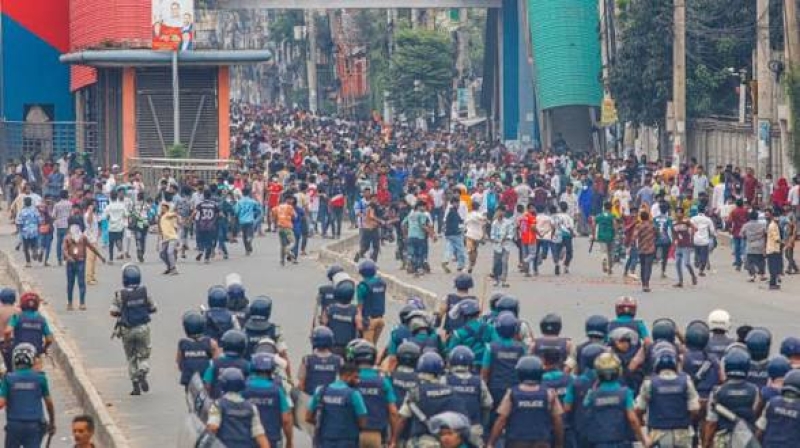
Bangladesh’s readymade garment (RMG) industry is facing mounting operational and commercial pressures amid prolonged labour unrest, factory closures and wider political uncertainty, with international buyers seeking assurances over production and shipment schedules.
Factory owners and industry representatives estimate that disruptions across major apparel hubs, including Savar, Ashulia, Jirani, Gazipur, Mymensingh, Mirpur and Narayanganj, have caused losses of Tk 3,000 crore to Tk 4,000 crore. Daily losses are estimated at Tk 200 crore to Tk 220 crore.
Buyers concerned over disruptions
At a meeting with Bangladesh Garment Manufacturers and Exporters Association (BGMEA) leaders at its Uttara office, representatives of major European and North American fashion retailers, including H&M and Inditex, expressed concern over shipment delays and production disruptions caused by protests and worker walkouts.
A BGMEA director, speaking on condition of anonymity, said the current period was critical for securing orders ahead of the upcoming autumn and winter seasons. However, many overseas buyers have adopted a wait-and-see approach.
Retailers are seeking clarity on Bangladesh’s proposed minimum wage structure and the reliability of its supply chain before committing to new orders, the director said.
Tensions have intensified over wage demands amid rising living costs and inflation, as well as complaints about unpaid wages and allowances, job security and workplace safety. The current minimum monthly wage for garment workers is Tk 12,500, while some workers and their representatives have demanded an increase to Tk 32,000.
On November 1, the government formed a six-member minimum wage board, aiming to introduce a new wage structure from December 2026. The workers' representatives have proposed a minimum wage of Tk 32,000, while the owners' representatives are scheduled to present their proposal at a meeting on November 23.
Industry warns of mounting losses
Industry leaders have stressed that restoring law and order and ensuring factory security are essential to maintaining production and protecting Bangladesh's position as the world's second-largest apparel exporter.
BGMEA President Mahmud Hasan Khan said ongoing protests and disruptions had severely affected production. An average of around 70 factories had remained closed daily since the unrest began, while closures peaked at 679 factories in a single day, affecting around 1.68 million workers on November 2, he said.
Even at factories that have reopened, slowdowns, walkouts and clashes have disrupted output and increased costs.
"A negative message is going out to foreign buyers, and new orders are declining," Khan said, warning that some buyers were considering alternative sourcing destinations as rising operating costs squeezed manufacturers' margins and threatened employment.
Khan and Bangladesh Knitwear Manufacturers and Exporters Association (BKMEA) President Mohammad Hatem have also stressed that factory operations cannot be sustained without adequate security on the shop floor.
Some factory owners have cited Section 13(1) of the Bangladesh Labour Act 2006, which provides for a "no work, no pay" arrangement, amid closure notices at several factories. Industry insiders, however, said temporary closures or general holidays should be distinguished from permanent shutdowns, while small and medium-sized enterprises were facing severe cash-flow pressures.
Bangladesh Garment Buying House Association (BGBA) President Md Abdul Hamid said at a press conference in Dhaka on Thursday, November 19, that the unrest, factory closures and road blockades had caused losses of Tk 3,000 crore to Tk 4,000 crore.
He estimated daily losses at Tk 200 crore to Tk 220 crore.
Hamid warned that missed shipment deadlines could force exporters to resort to costly air freight, accept demands for price discounts, face order cancellations or lose business to competitors such as India, Vietnam, Cambodia and Pakistan.
He called for urgent government intervention and a negotiated settlement involving the government, BGMEA, BKMEA, buying houses and worker representatives.
Experts call for dialogue, confidence-building
Industry analysts and economists say the crisis extends beyond immediate workplace grievances, putting export earnings, foreign exchange inflows, supply-chain links and investor confidence at risk.
The RMG sector accounts for more than 80% of Bangladesh's merchandise exports, making prolonged disruption a significant concern for the wider economy.
Dr Fahmida Khatun, distinguished fellow at the Centre for Policy Dialogue (CPD), warned that continued instability could delay export deliveries, undermine buyer confidence, divert future orders to competing countries and damage the investment climate.
She said workers' legitimate demands should be addressed through dialogue while factory security was ensured to restore normal production as quickly as possible.
Mohiuddin Rubel, a former BGMEA director and founder and CEO of Bangladesh Apparel Voice, said repeated disruptions were raising questions about Bangladesh's reliability as a sourcing destination.
He pointed to the continued operation of around 340 factories in Chattogram through proactive communication and coordination, and urged factory owners and workers to build trust through regular engagement and realistic negotiations that balance workers' living costs with production viability.