

- PM seeks to make Bangladesh a reliable brand in global livestock market |
- Türk warns of increased risk of atrocity crimes on Palestinians |
- ADB Approves $150m Loan for Water Services in Eight Towns |
- Oil Prices Rise Amid Houthi Attack Claim, Hormuz Fears |
- At Least 30 Killed in Fuel Tanker Fire on Egypt Highway |
Dhaka Ranks 5th Among World's Most Polluted Cities on Friday
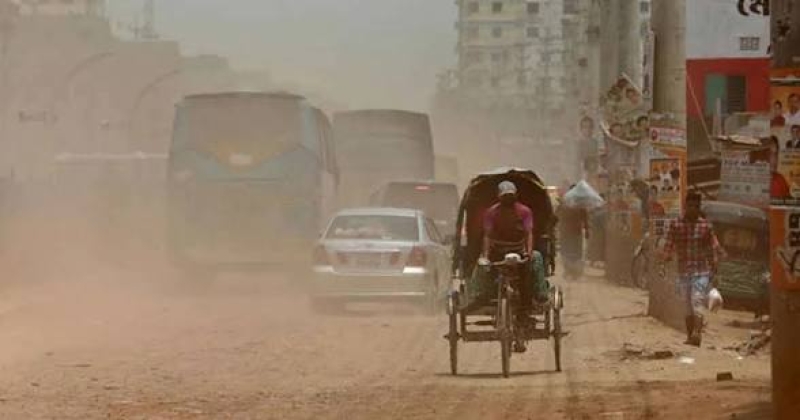
Dhaka ranked fifth among the world's most polluted cities on Friday, despite the public holiday, with an air quality index (AQI) score of 189.
The air quality at this level is considered unhealthy for the general public.
Afghanistan's capital, Kabul, topped the list with an AQI score of 297, indicating very unhealthy air quality.
According to the air quality index published by Swiss-based air quality monitoring organisation IQAir on Friday (November 27), Pakistan's Lahore ranked second with a score of 293, followed by India's Delhi at 264.
Kolkata, also in India, ranked fourth with an AQI score of 234, while Dhaka placed fifth with 189.
Under IQAir's classification, an AQI score of 0–50 indicates good air quality, while 51–100 is considered moderate. A score of 101–150 is unhealthy for sensitive groups, and 151–200 is classified as unhealthy.
Scores between 201 and 300 indicate very unhealthy air, while readings above 300 are considered hazardous.
In Bangladesh, the AQI is calculated based on five major pollutants: particulate matter (PM10 and PM2.5), nitrogen dioxide (NO2), carbon monoxide (CO), sulphur dioxide (SO2) and ozone (O3).
A March 2019 report by the Department of Environment and the World Bank identified brick kilns, vehicle emissions and dust from construction sites as the three major sources of air pollution in Dhaka.
According to the World Health Organization (WHO), air pollution increases deaths from stroke, heart disease, chronic obstructive pulmonary disease, lung cancer and acute respiratory infections. It is estimated to cause around seven million deaths worldwide each year.