

- Dhaka Ranks 7th Among World’s Most Polluted Cities on Wednesday |
- 4 killed in bus- auto-rickshaw collision at Mirpur |
- PM Pushes Plans for Second Padma, Jamuna Bridges, Barrage |
- Tap grants, local finance; shun loans for energy sovereignty |
- Govt eyes 3,000-4,000MW solar power addition to grid before next summer: PM |
Dhaka Ranks 7th Among World’s Most Polluted Cities on Wednesday
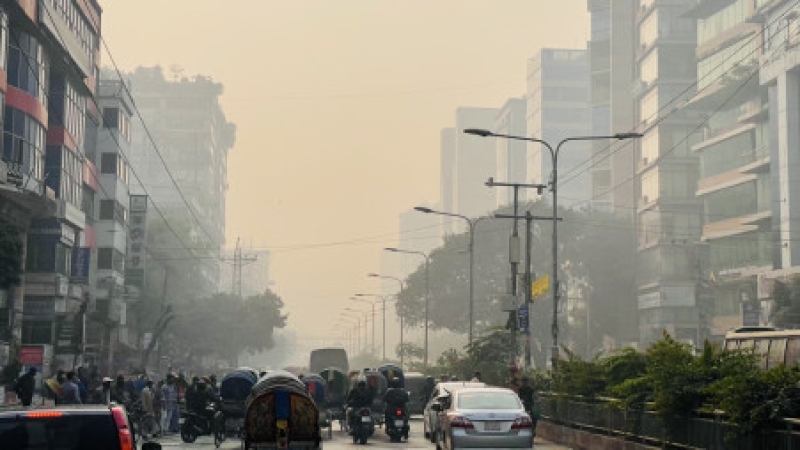
Pakistan’s Lahore topped the list of the world’s most polluted cities on Wednesday, November 4, with an Air Quality Index (AQI) score of 386, indicating hazardous air quality. Dhaka ranked seventh among 126 cities, with an AQI score of 154, classified as unhealthy.
According to the air quality index published by Swiss air quality monitoring platform IQAir, New Delhi, the capital of India, ranked second with a score of 249.
Kolkata, the capital of India’s West Bengal state, ranked third with an AQI of 185. Beijing, China, ranked fourth with a score of 173, while Karachi, Pakistan, placed fifth with a score of 160.
Under IQAir’s classification, an AQI score of 0–50 indicates good air quality, while 51–100 is considered moderate. Scores of 101–150 are classified as unhealthy for sensitive groups, and readings between 151 and 200 indicate unhealthy air quality. Scores of 201–300 are considered very unhealthy, while readings above 300 fall into the hazardous category.
Bangladesh determines its AQI based on five categories of pollutants: particulate matter (PM10 and PM2.5), nitrogen dioxide (NO₂), carbon monoxide (CO), sulfur dioxide (SO₂) and ozone (O₃).
A 2019 report by the Department of Environment and the World Bank identified brick kilns, vehicle emissions and construction-site dust as three major sources of air pollution in Dhaka.
The World Health Organization says air pollution increases the risk of stroke, heart disease, chronic obstructive pulmonary disease, lung cancer and acute respiratory infections. It is estimated to contribute to around seven million deaths worldwide each year.