

- Mirza Fakhrul to Take Oath as Bangladesh President Today |
- Clean energy transition needs land; can it help restore it too? |
- Ruhul Kabir Rizvi Named BNP Acting Secretary General |
- Over 770 US Service Members Killed or Injured in Iran War |
- Mirza Fakhrul Elected Bangladesh’s 23rd President |
Dhaka ranks 15th in global air quality ranking
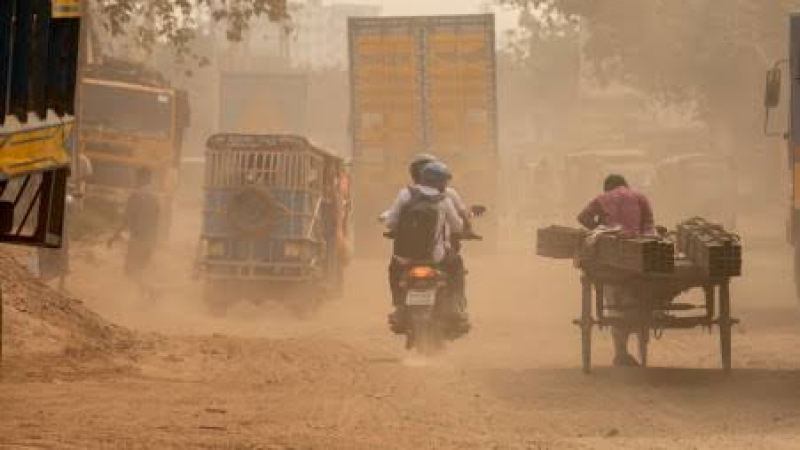
Dhaka ranked 15th among the world’s most polluted cities on Friday morning, recording an Air Quality Index (AQI) score of 98.
The city’s air quality was classified as ‘moderate’, according to the AQI scale.
Malaysia’s Kuching topped the list with an AQI of 196, followed by Manama, Bahrain, with 177, and Kampala, Uganda, with 169.
Kinshasa, capital of the Democratic Republic of the Congo, was also among the cities with the highest pollution levels.
An AQI between 50 and 100 is considered "moderate" with an acceptable air quality while AQI between 101 and 150 is considered ‘unhealthy for sensitive groups’, while a score between 151 and 200 is classified as ‘unhealthy’. AQI readings between 201 and 300 are termed ‘very unhealthy’, and anything above 301 is considered ‘hazardous’, posing serious health risks.
The AQI is a daily indicator of air quality, showing how clean or polluted the air is and the possible health effects people may experience.
In Bangladesh, the AQI is calculated based on five major pollutants: particulate matter (PM10 and PM2.5), nitrogen dioxide, carbon monoxide, sulphur dioxide and ozone.
Dhaka has long struggled with severe air pollution. Air quality usually worsens during winter and improves in the monsoon season.
According to the World Health Organization, air pollution causes around seven million deaths globally each year, mainly from stroke, heart disease, chronic respiratory diseases, lung cancer and acute respiratory infections, reports UNB.