

- Next President Likely From BNP Standing Committee |
- Resignation of President Mohammed Shahabuddin for ill health |
- Why President Shahabuddin resigned from office |
- President Mohammed Shahabuddin Resigns |
- Experts Call for Better Flood Forecasting, Urban Planning |
Dhaka’s air quality continues to be ‘moderate’
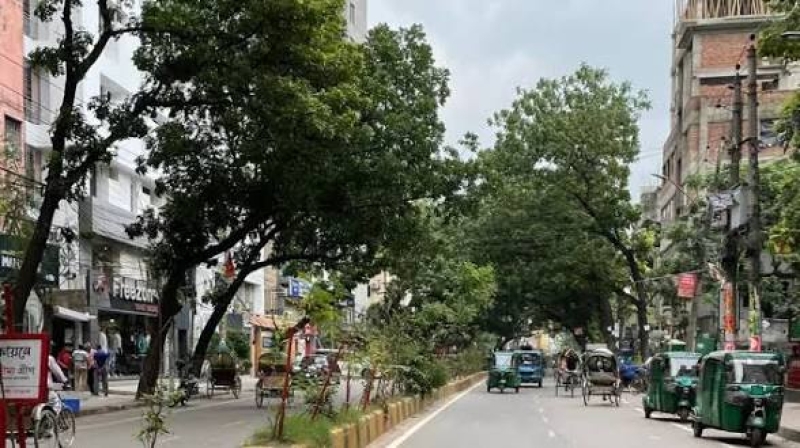
Dhaka, the overcrowded capital city of Bangladesh, has ranked 17th on the list of cities with the worst air quality with an AQI score of 91 at 09:10 am this morning.
Today Dhaka’s air was classified as ‘moderate,’ referring to a light healthy threat, according to the AQI index.
Uganda’s Kampala, the Democratic Republic of Congo’s Kinshasa and Chile’s Santiago occupied the first, second and third spots on the list, with AQI scores of 174, 152, and 151, respectively.
When the AQI value for particle pollution is between 50 and 100, air quality is considered ‘moderate’, usually sensitive individuals should consider limiting prolonged outdoor exertion, between 101 and 150, air quality is considered ‘unhealthy for sensitive groups’, between 150 and 200 is ‘unhealthy’, between 201 and 300 is said to be 'very unhealthy', while a reading of 301+ is considered 'hazardous', posing serious health risks to residents.
The AQI, an index for reporting daily air quality, informs people how clean or polluted the air of a certain city is and what associated health effects might be a concern for them.
The AQI in Bangladesh is based on five pollutants: particulate matter (PM10 and PM2.5), NO2, CO, SO2, and ozone. Bangladeshtravel guide
Dhaka has long been grappling with air pollution issues. Its air quality usually turns unhealthy in winter and improves during the monsoon.
The World Health Organization estimates that air pollution causes around seven million deaths globally each year, mainly due to stroke, heart disease, chronic obstructive pulmonary disease, lung cancer and acute respiratory infections, reports UNB.