

- Dhaka's air 5th worst in the world this morning |
- Around 7,500 Bangladeshis imprisoned in Saudi Arabia: Shama Obaed |
- Bangladesh Outperforms India in Global Hunger Index 2026 |
- Covered van hits Gazipur police patrol team, killing SI, BNP leader |
- Korean City scrambles to rescue dusky shark after it returns to canal |
TSP fertiliser shortage worries northern farmers; officials blame overuse
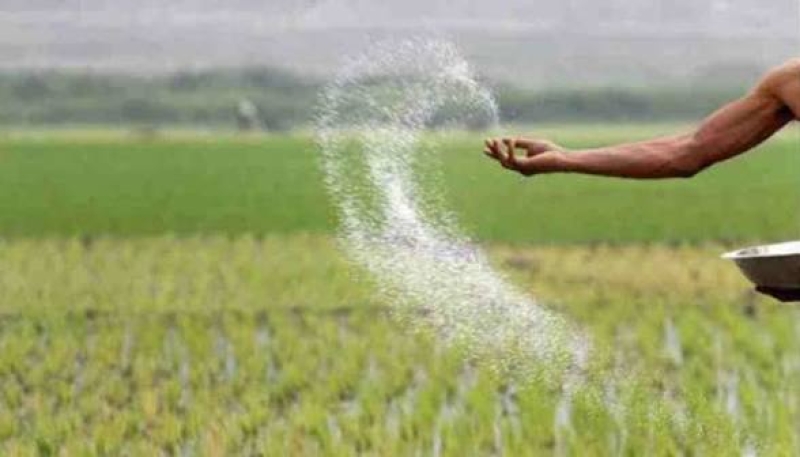
Farmers in northern Bangladesh are struggling to collect triple super phosphate (TSP) fertiliser during the peak Aman rice season, with many saying they cannot obtain the fertiliser even by paying above the government-fixed price.
Although urea and diammonium phosphate (DAP) are generally available according to demand, TSP supplies remain inadequate in several areas, leaving farmers worried about timely application and crop yields.
The situation is particularly difficult for farmers living in chars and riverbank areas where the absence of fertiliser dealers forces them to travel long distances to buy the necessary inputs.
In some of these areas, farmers also alleged that urea and DAP are being sold at prices higher than the government-fixed rates.
The shortage is being reported across the five districts of the Rangpur region—Rangpur, Lalmonirhat, Kurigram, Gaibandha and Nilphamari—at a time when farmers are busy transplanting Aman seedlings in their fields.
Lalmonirhat Sadar upazila farmer Nazrul Islam has cultivated transplanted Aman on eight bighas of land and needs around 100 kg of TSP fertiliser. But after visiting six fertiliser shops, he managed to collect only 45 kg.
Of that amount, he bought 15 kg at the government-fixed price of Tk 27 per kg. For the remaining 30 kg, he had to pay Tk 3-4 more per kg.
Nazrul said TSP is important for strengthening the roots of rice plants and helping them grow quickly.
“I am extremely worried because I have not been able to collect the amount of TSP I need. Even after offering a higher price, I could not get enough,” he said.
He said urea and DAP were available according to demand, but the shortage of TSP was causing serious concern.
“If we cannot apply the required amount of TSP to the fields at the right time, we may not get the expected Aman yield,” he said.
Bablu Mia, a farmer from Char Shailmari in Kaliganj upazila of Lalmonirhat, said farmers are receiving less than 20 percent of the TSP they needed.
He has cultivated Aman on 12 bighas and needs around 170 kg of TSP, but has managed to collect only 50 kg.
“Dealers tell us that there is no TSP available. Even if we are willing to pay more, we cannot get it,” Bablu said.
He said farmers sre able to obtain urea and DAP, but have to pay Tk 2-3 more per kg than the government-fixed prices in some cases.
In Rangpur’s Gangachara upazila, farmer Monnaf Mia of Mahipur Teesta Char has also been struggling to collect TSP. He spent three days visiting fertiliser shops in search of the fertiliser.
Monnaf has cultivated Aman on 10 bighas and needs around 150 kg of TSP. So far, he has managed to collect only 50 kg, paying more than the official price.
Julhas Hossain, a fertiliser dealer in Bajra area of Ulipur upazila in Kurigram, said demand for TSP has increased sharply among farmers.
“My shop receives demand for at least 10,000 kg of TSP every week, but I have been allocated only 500 kg by the government,” he said.
“If the government does not increase the allocation, how can we meet farmers’ demand?” he asked.
According to the Department of Agricultural Extension, the target for Aman cultivation in the five districts of the Rangpur division has been set at 621,550 hectares this year, with a production target of 2,001,391 tonnes of rice.
Last year, Aman was cultivated on 621,398 hectares in the region. The cultivation target has therefore increased by 152 hectares this year, although officials expect the actual acreage could exceed the target.
According to Bangladesh Agricultural Development Corporation (BADC) fertiliser sources, the government has fixed the retail price of urea at Tk 27 per kg, TSP at Tk 27 and DAP at Tk 21.
However, agricultural officials say the current demand for TSP is partly driven by excessive use by farmers.
Dr Sirajul Islam, additional director of the Department of Agricultural Extension in the Rangpur region, said TSP is not required in large quantities at the stage when Aman seedlings are being transplanted.
“Farmers do not want to understand this. They are becoming increasingly dependent on TSP,” he said, adding that necessary nutrients are also available through urea and DAP.
He said farmers are using five to six times more TSP than recommended, creating the impression that government allocations were insufficient compared with demand.
“Demand for TSP is assessed according to recommended agricultural practices, and the government allocates fertiliser accordingly. Farmers are using excessive amounts based on their own expectations, which may actually harm the soil rather than benefit it,” Dr Sirajul said.
He said the agricultural department is conducting awareness campaigns to encourage farmers to use fertiliser according to recommendations.
Meanwhile, Shahidul Islam, joint director of the Rangpur regional BADC (Fertiliser), said there was no overall shortage of fertiliser in the region.
“There is sufficient stock of fertiliser until October,” he said.
He said fertiliser is allocated based on demand submitted by the agricultural department and supplied to farmers through registered dealers every month at government-fixed retail prices, reports UNB.
“If there is a shortage somewhere or fertiliser is being sold at a higher price, dealers may be creating an artificial shortage to make additional profits,” Shahidul said.
He added that the agricultural department and local administration are monitoring the situation in the field.